
Last updated November 3, 2026
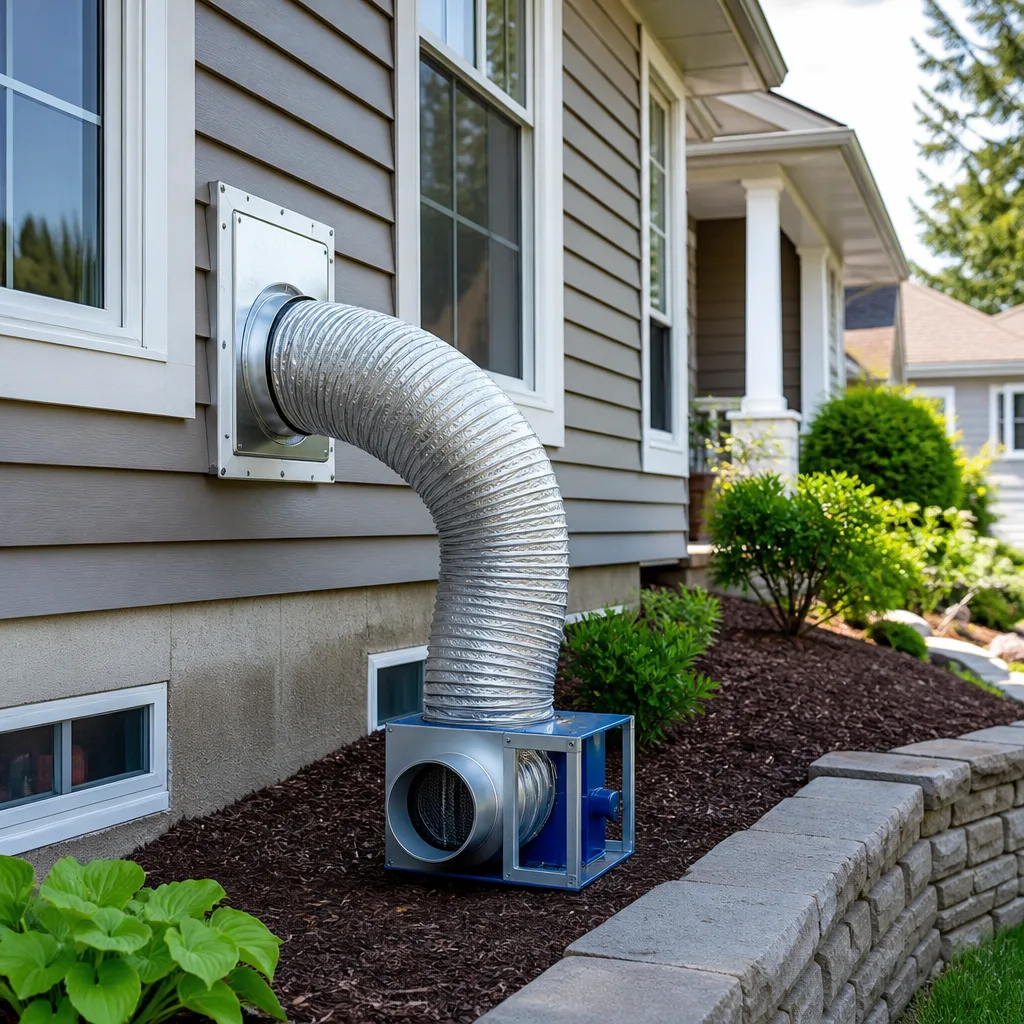 Whole-home duct cleaning
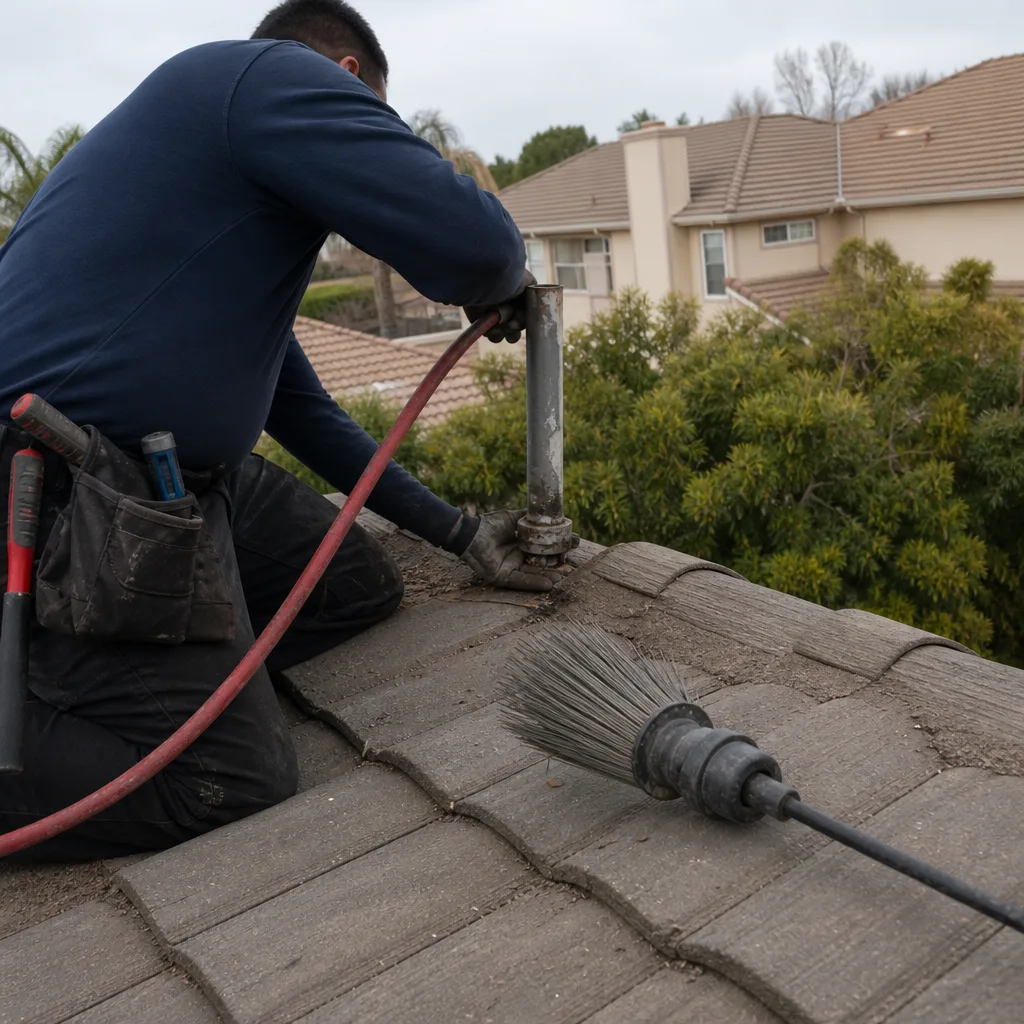
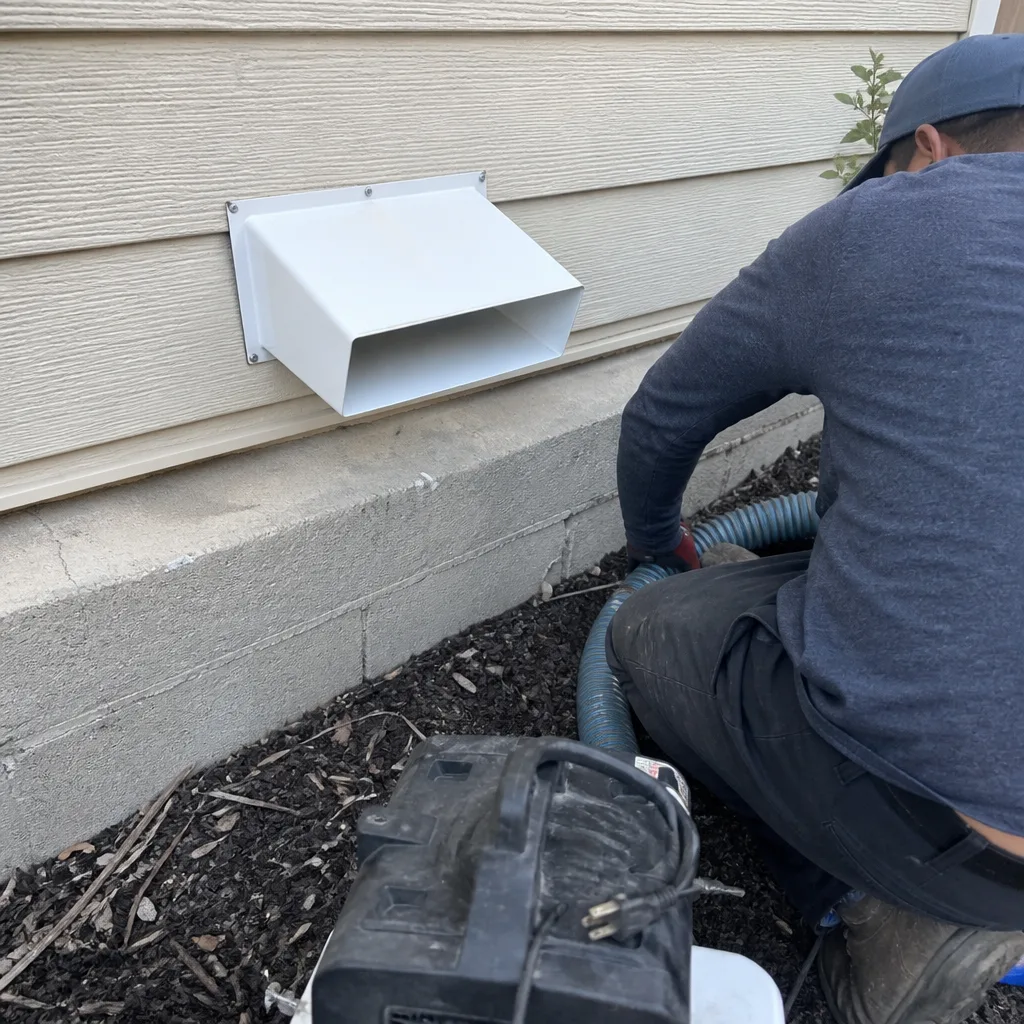
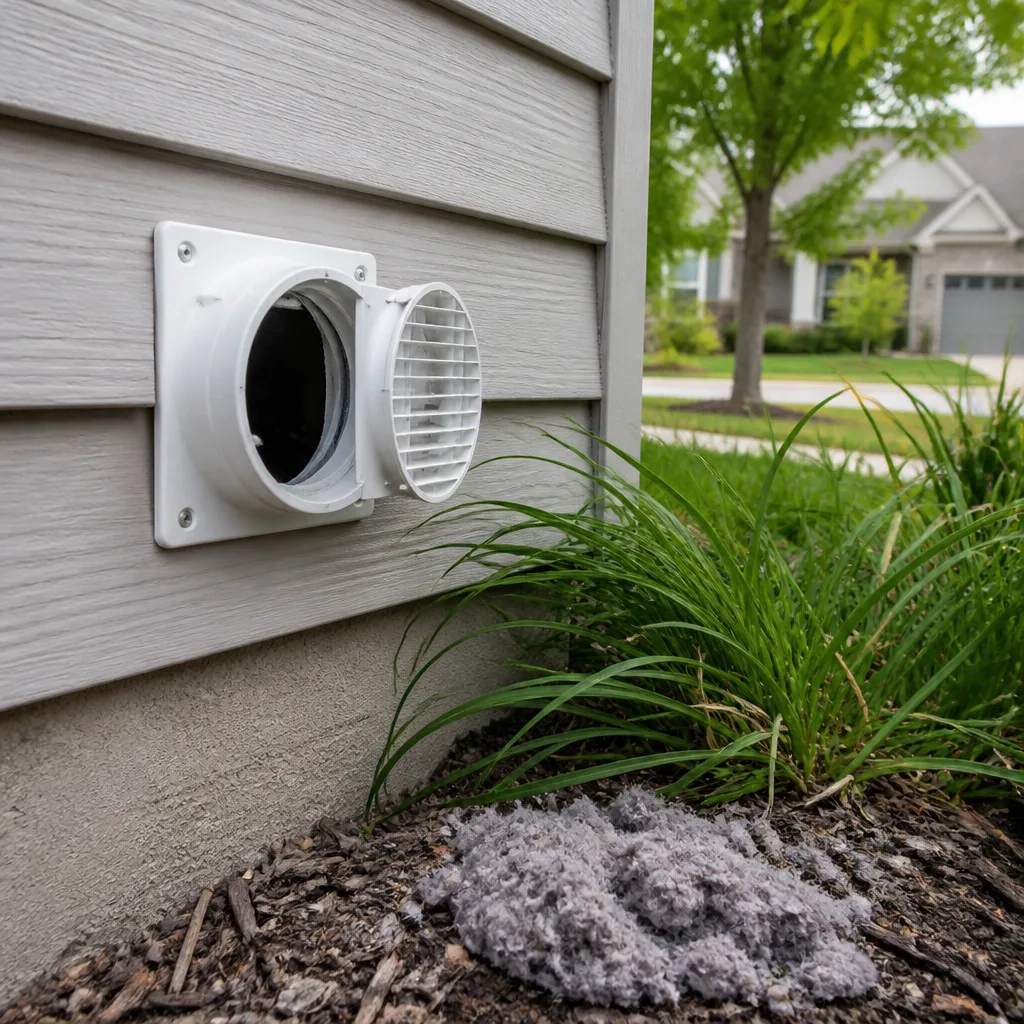 Dryer vent cleaning
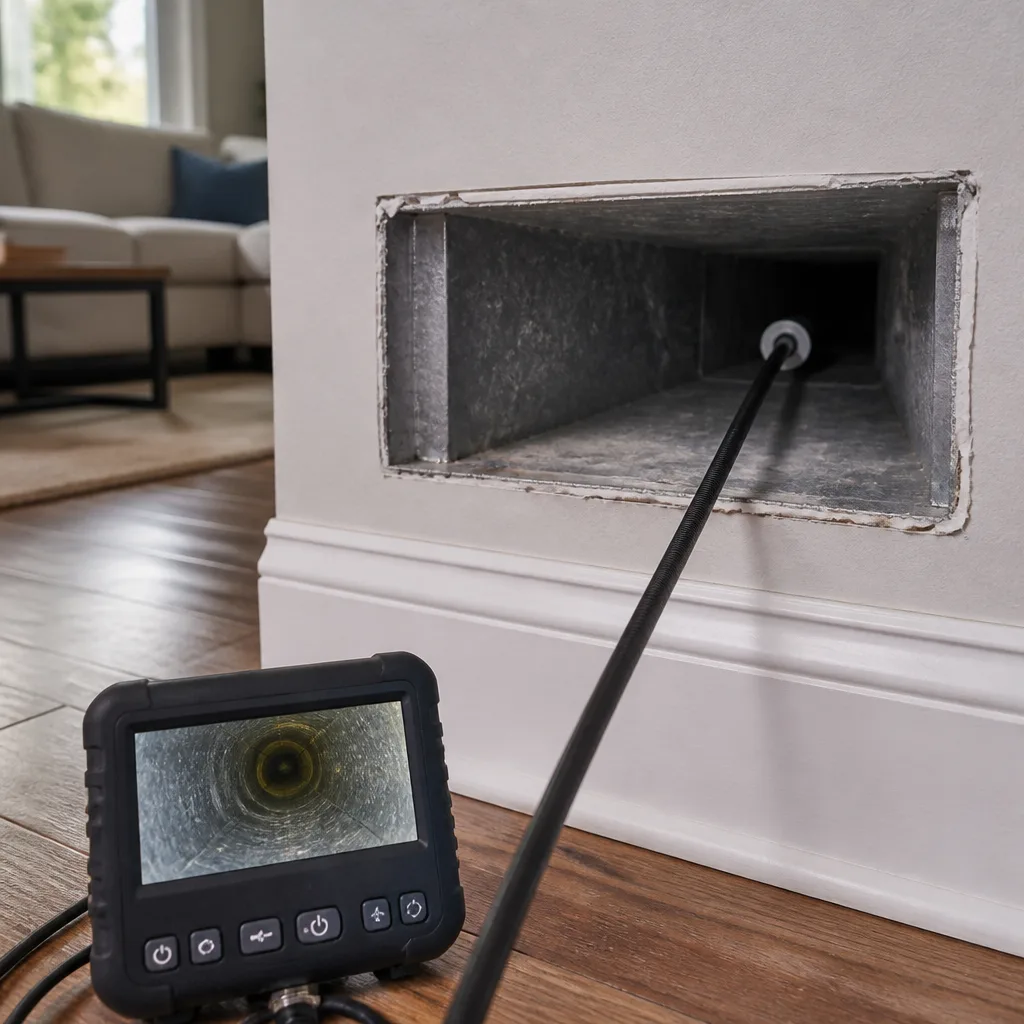 Camera inspection
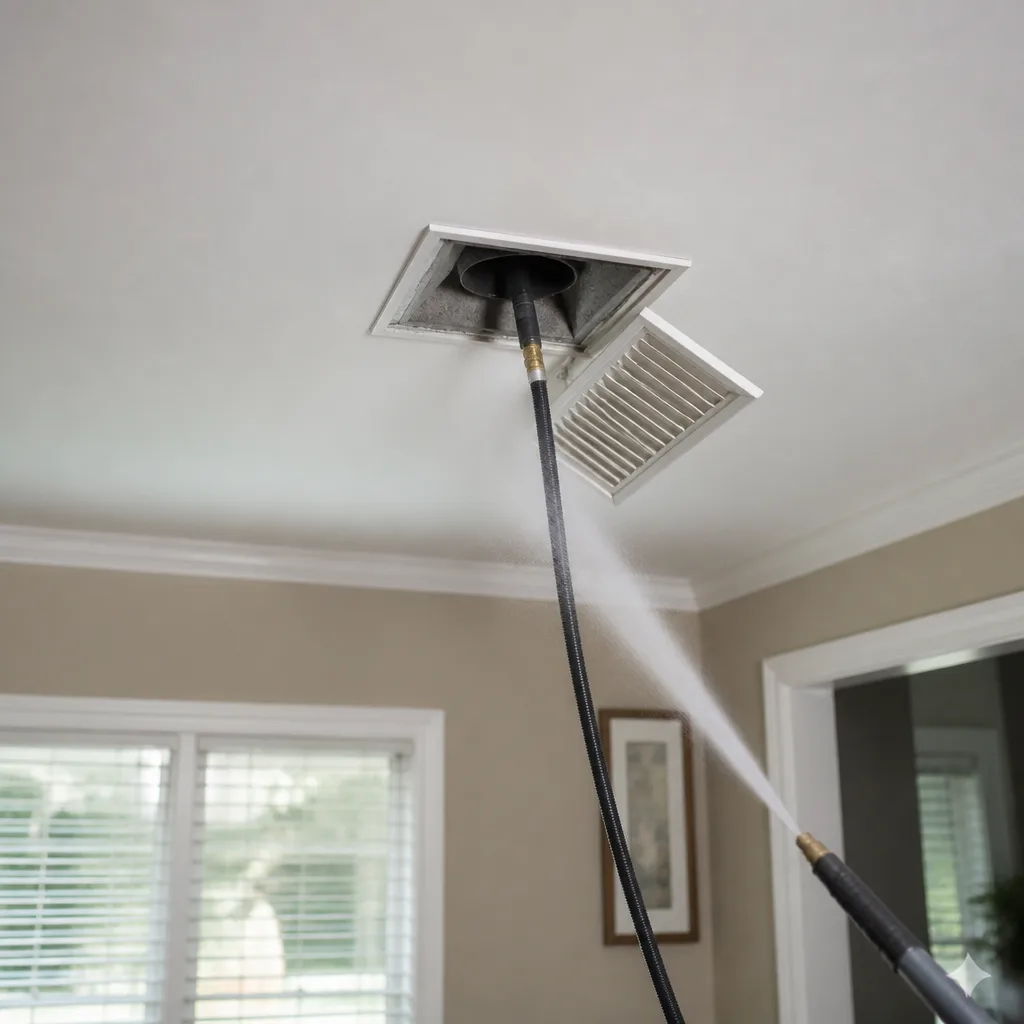 Sanitizing & deodorizing
Whole-system duct and dryer vent check with before-and-after photos - you see exactly what came out of your vents
That "$99 whole-house special" is a bait ad - the real number appears once they are in your hallway, or the "clean" is a shop-vac at the register. We photograph the inside of your ducts before and after instead.
The Complete Air Duct Cleaning Guide for Clovis Homeowners
The San Joaquin Valley ranks among the worst air quality regions in the country, yet most duct cleaning guides read like they were written for a house in coastal San Diego. In Clovis, your ducts accumulate a specific mix of fine clay particulates, agricultural dust, and seasonal wildfire smoke that behaves differently from the lint-and-pet-hair profile national guides assume. This page is built for Clovis specifically: what actually gets into your ductwork here, how a legitimate Air Duct Cleaning job removes it, how to verify the work was done, and why sealing matters more in this climate than almost anywhere else. You’ll learn the full inspection-to-verification process, what equipment matters, and the questions to ask before anyone puts a hose into your vents.
Quick Answer
Air duct cleaning in Clovis should be a full-system process: camera inspection first, then mechanical agitation with contact brushes, then negative-pressure extraction with HEPA filtration to capture what gets loosened. For most Clovis homes, that means scheduling service every 3 to 5 years depending on proximity to agricultural operations, HVAC filter quality, and whether ducts are sealed. The most important step most companies skip is post-clean verification: before-and-after photos from inside the register boots and a pressure check that confirms the system isn’t leaking the very air you just paid to clean.
Styles & brands we work with
- Whole-home duct cleaning
- Dryer vent cleaning
- Camera inspection
- Sanitizing & deodorizing
Table of Contents
- Why Clovis Ducts Get Dirtier Than National Averages
- What a Camera Inspection Actually Looks For
- The Three-Phase Cleaning Process: Agitation, Extraction, Verification
- How to Verify the Job Was Done Right
- Why Duct Sealing Is Non-Optional in Clovis
- How Often Should Clovis Homes Clean Their Ducts?
- Dryer Vents: The Fire-Safety Variable Most Guides Ignore
- Common Mistakes to Avoid
- When to Call a Professional
- Frequently Asked Questions
Why Clovis Ducts Get Dirtier Than National Averages
National duct cleaning guides operate on a generic dust profile: some skin cells, some pet hair, maybe pollen. Clovis operates on a different loading rate entirely. The Valley’s agricultural belt, combined with clay-heavy soil and temperature inversions that trap particulate matter, means your return ducts pull in a finer, denser contaminant mix than a suburban home in, say, Ohio or North Carolina. That fine particulate settles into duct lining, builds up on blower fan blades, and coats the evaporator coil in a film that reduces heat transfer and raises cooling costs through the long Clovis summer.
Here’s what we actually see in Clovis ductwork, by contaminant type:
- Fine clay dust: The same soil that makes Clovis yards crack in August makes its way indoors. Particles are small enough to stay suspended, travel through the return, and pack into duct corners.
- Agricultural residue: Depending on your proximity to active fields or orchards, your ducts may carry pesticide dust, fertilizer particulates, and crop debris. Proximity to operations off Fowler Avenue or out toward the Herndon corridor significantly changes loading rates.
- Wildfire smoke residue: Seasonal smoke from Sierra and Valley fires deposits a fine carbon film inside ducts. It bonds to existing dust and creates a residue simple vacuuming won’t remove.
- Construction debris: Clovis’s ongoing new-home development means many homeowners buy or renovate and never realize drywall dust, sawdust, and insulation fragments are circulating through the HVAC from day one.
- Pet dander and hair: The one variable national guides get right, but in Clovis’s dry climate, it bakes onto surfaces rather than staying loose and easy to remove.
The practical takeaway: if you moved into a Clovis home that’s more than three years old and have never had ducts inspected, the base assumption should be that the system is carrying a heavier contaminant load than any national “average” estimate would suggest. A standard coupon cleaning that runs a vacuum hose through the registers for 45 minutes will leave the majority of that material in place.
For a deeper look at what a full-system cleaning entails, see our Air Duct Cleaning in Clovis service page. Our Duct Cleaning Clovis home page also maps the full scope of what we handle.
What a Camera Inspection Actually Looks For
Any legitimate duct cleaning in Clovis starts with a camera. Skipping this phase guarantees a missed diagnosis. A technician who hooks up a vacuum and starts agitating without first looking inside the ducts is guessing at what’s there, and more importantly, is potentially missing damage that cleaning could make worse.
A proper inspection covers these specific points:
- Duct liner condition: Older Clovis homes may have fiberglass-lined ducts that degrade over time. Camera footage shows whether the liner is intact or shedding fibers into the airstream.
- Moisture evidence: The Valley’s dry climate doesn’t eliminate condensation. A camera inspection looks for water staining, rust, or microbial growth around the evaporator coil and in low duct runs.
- Debris composition and volume: Is the accumulation loose dust that will extract easily, or compacted clay that requires aggressive mechanical agitation? The camera tells the technician what tooling to use.
- Leak points and disconnections: Flex duct in Clovis attics can separate at joints, pull away from register boots, or develop tears. The camera identifies these before cleaning begins, because cleaning a disconnected duct pushes debris directly into the attic insulation.
- Rodent or pest evidence: Droppings, nesting material, or carcasses require a different cleaning and sanitation protocol than standard dust extraction.
- Filter bypass evidence: Dust accumulation patterns that suggest air is bypassing the filter entirely, which points to filter rack leakage and usually requires repair before cleaning provides lasting benefit.
The inspection also determines whether your system is compatible with the cleaning method. Homes with certain duct configurations, access limitations, or severe damage may need Air Duct Repair in Clovis before or instead of cleaning. In our experience, roughly a third of Clovis homes inspected for the first time show at least one issue that cleaning alone won’t fix.
The Three-Phase Cleaning Process: Agitation, Extraction, Verification
There is a right way to clean ducts, and there is the fast way. The right way follows a sequence that ensures contaminants are loosened, captured, and confirmed gone. Here’s the full three-phase process, step by step, so you can evaluate any contractor against it. For a deeper dive, see The Complete Guide to Air Duct Cleaning in Clovis.
Phase 1: Mechanical Agitation
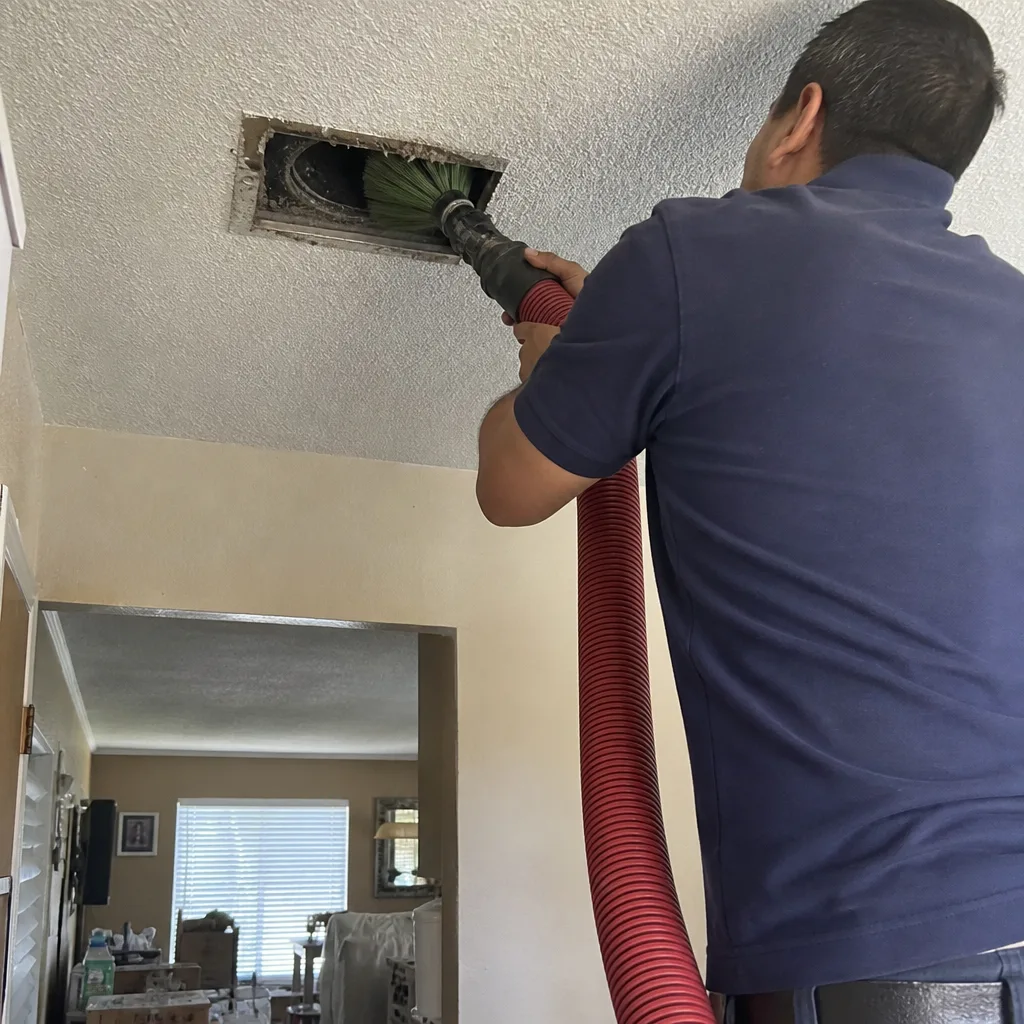
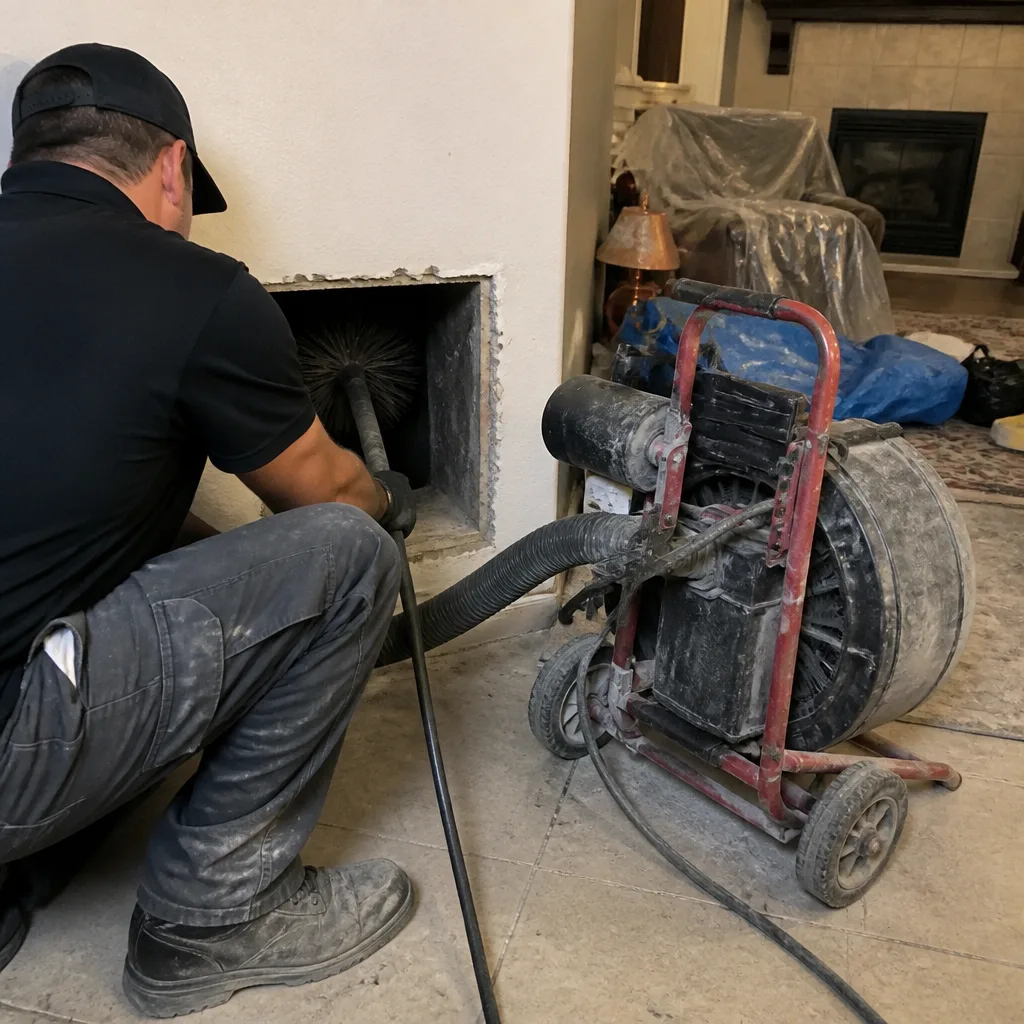
Vacuum alone removes loose surface dust. It does not remove the compacted layer that adheres to duct walls. That requires contact agitation – a brush that physically scrubs the duct interior and knocks the bonded material into the airstream for capture. We use Rotobrush brush-contact extraction systems for this phase. The rotating brush head reaches into the duct, scrubs walls and corners, and simultaneously feeds loosened debris toward the vacuum collection point. This is the same category of equipment restoration crews use when remediation calls for actual contaminant removal, not surface sweeping.
Without this phase, what gets removed is only what was already loose. The dense layer stays behind, which means the homeowner pays for a cleaning that changes nothing measurable about the air they breathe.
Phase 2: Negative-Pressure Extraction
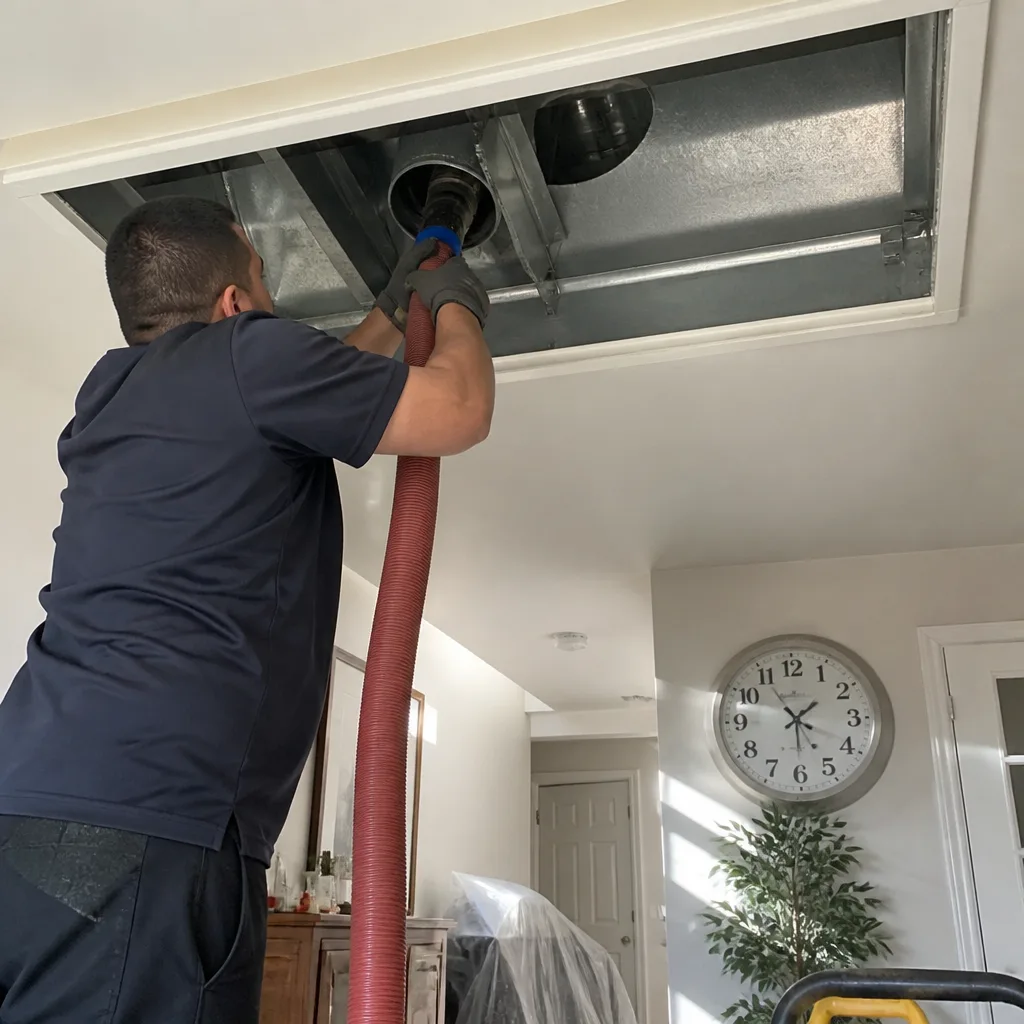
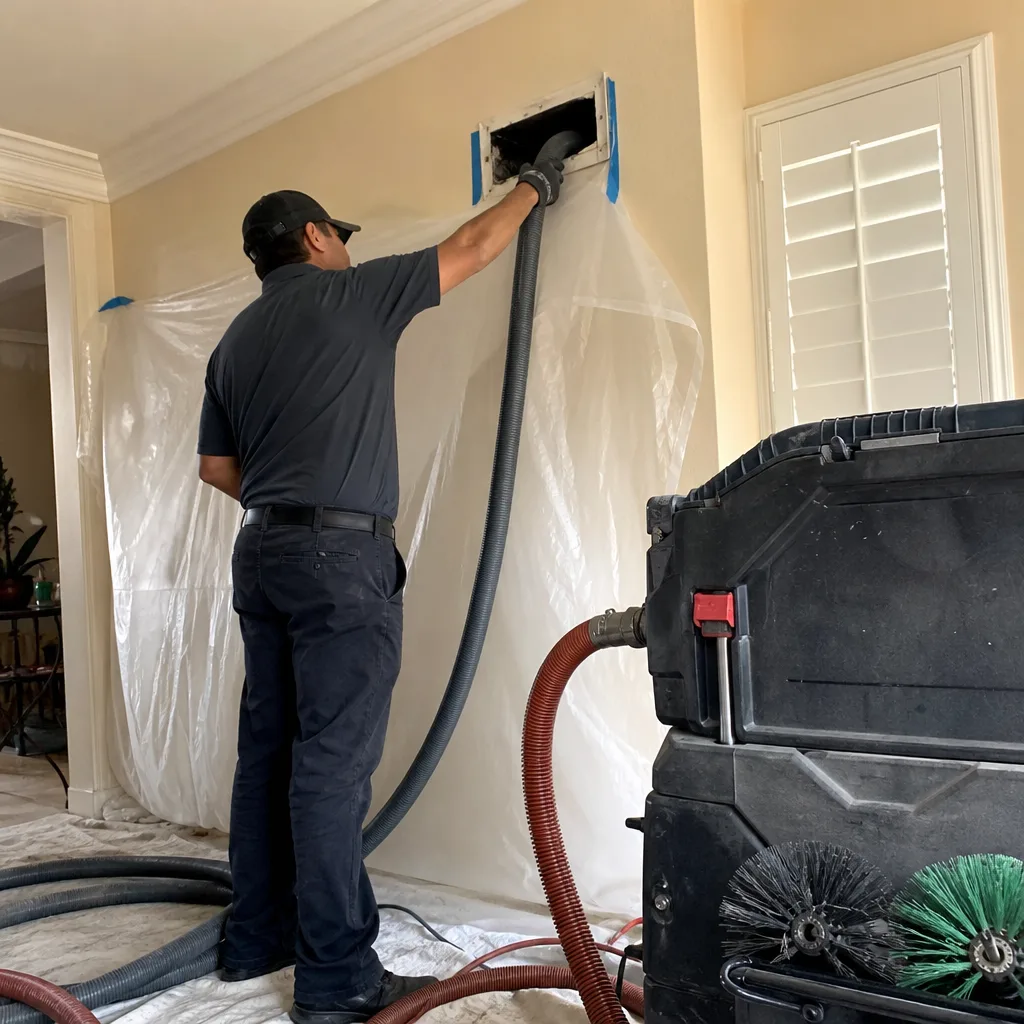
Once agitation loosens the contaminants, extraction must capture them at the source. A proper setup creates negative pressure in the duct system – meaning air flows out of the ducts into the collection equipment, never back into the home. We pair Rotobrush agitation with Nikro HEPA-filtered vacuum systems for this phase. The Nikro unit’s HEPA filtration captures particles down to 0.3 microns, which matters in Clovis specifically because the fine clay and agricultural particulates fall in a size range that lesser filtration systems would simply recirculate into the living space.
Some companies use consumer shop vacs or basic truck-mount setups that don’t maintain negative pressure throughout the cleaning. What happens then is predictable: agitation kicks debris into the air, and without containment, that debris settles back into the ducts or into the home. You end up paying for a dust redistribution service.
Phase 3: Verification
The final phase is where most contractors stop. They don’t show you what they did, they just tell you it’s done. Verification means:
- Before-and-after photos from inside the register boots: The technician should be able to show you the same duct section before cleaning and after. If the after-photo still shows visible debris, the job isn’t finished.
- Pressure differential testing: A properly sealed and cleaned system holds negative pressure during cleaning. After cleaning, airflow should be measurably improved at each register compared to before. A simple flow hood or anemometer reading at the register tells you whether airflow actually changed.
- Visual inspection of the plenum and coil: The evaporator coil should be visibly cleaner after service. If the coil wasn’t addressed or protected during cleaning, it will re-contaminate the ducts within weeks.
If a Clovis contractor can’t or won’t provide these verification points, the job was incomplete regardless of what the invoice says.
How to Verify the Job Was Done Right
You don’t need technical training to confirm whether a duct cleaning actually happened the way the brochure claimed. Here’s a practical verification checklist any Clovis homeowner can run after the crew leaves:
- Request register-boot photos during the estimate. Before the work begins, ask the contractor to commit to providing before-and-after images from inside the register openings. A company that hesitates is a red flag.
- Check the filter after cleaning. If the work was thorough, your HVAC filter should show visible dust accumulation within days, not weeks. If it stays white for a month, the system wasn’t circulating loosened debris because the debris wasn’t loosened.
- Feel register airflow. Walk the house and hold a tissue at each register. Airflow should feel noticeably stronger after cleaning, especially in second-story rooms or far-run registers that were previously weak.
- Look at the boots. Remove a register cover and look down into the boot with a flashlight. You should see clean metal, not a dust coating. The boot is the final segment before air enters the room; residue there indicates incomplete extraction.
- Ask about the waste container. A legitimate full-system cleaning from a Clovis home with real accumulation will produce a visible amount of extracted material. Ask to see the collection canister before disposal.
- Check for residual odor. If you had a musty or stale smell before cleaning, run the system for 24 hours after. The odor should be gone or dramatically reduced. If it returns within a week, the source wasn’t removed.
None of these checks requires special equipment. Together they give you a reliable picture of whether the job was done at a professional standard or whether someone ran a hose for an hour and called it complete.
Why Duct Sealing Is Non-Optional in Clovis
Here’s the part most duct cleaning guides miss entirely: in Clovis, cleaning without sealing is a temporary fix. Leaking ducts undo the benefits of cleaning within weeks, not years. Here’s why.
Clovis attics are hot. During a Valley summer, attic temperatures routinely exceed 140 degrees. When your duct system has even small leaks – at joints, register boot connections, or plenum seams – the negative pressure created by the blower pulls attic air into the supply side. That attic air carries fiberglass insulation particles, dust, and heat into the air you breathe. On the return side, leaks pull crawlspace or garage air into the system before it reaches the filter, bypassing filtration entirely.
We regularly see Clovis homes where a cleaning was performed six months prior, yet the ducts already show a fresh film of contamination. The cause is rarely poor cleaning. It’s leaking ducts re-entraining particulates from unconditioned spaces.
The fix is Air Duct Repair in Clovis, which includes sealing. The most effective sealing methods in our market are:
- Mastic sealant at rigid duct joints: A brush-applied sealant that hardens into a durable, airtight bond at metal-to-metal connections.
- Aluminum foil tape (UL-rated) at flex duct connections: Not cloth “duct tape” – that fails in hot attics within a couple of years. Proper UL-listed foil tape is designed to hold in high-temperature environments.
- Aeroseal-style pressurized sealing: For homes with extensive, hard-to-reach leaks, a fog-sealant system that pressurizes the ducts and deposits sealant at leak points from the inside can be the most thorough option.
If a cleaning contractor doesn’t mention sealing, ask about it directly. In Clovis’s specific climate and contaminant profile, sealing is not an upsell. It’s the difference between a cleaning that lasts and one that doesn’t.
How Often Should Clovis Homes Clean Their Ducts?
There’s no single national answer to cleaning frequency, and any guide that gives you one is oversimplifying. For Clovis homeowners, the right interval depends on four variables:
- Proximity to agricultural operations: Homes within a quarter-mile of active fields or orchards load ducts significantly faster than homes in central Clovis or newer subdivisions on the east side. Agricultural dust is persistent and fine enough to bypass standard filters.
- HVAC filter quality: A basic fiberglass panel filter captures about 10% of the particulate that reaches it. A MERV 11 or MERV 13 pleated filter captures dramatically more, extending the interval between cleanings. If you run a Honeywell or Aprilaire whole-home filtration system, your ducts stay cleaner longer because fewer particulates reach them in the first place.
- Home age and renovation history: Homes built or renovated within the last two years usually carry construction debris in the ducts. A cleaning within the first year of occupancy is often warranted, regardless of “average” timelines.
- Occupant sensitivity: Asthma, allergies, or a compromised immune system warrants more frequent cleaning. The standard isn’t what the ducts look like – it’s what the occupants can tolerate.
As a practical baseline for Clovis:
- Typical suburban home, MERV 11+ filter, no agricultural proximity: every 4-5 years
- Home within a half-mile of active agriculture or unpaved roads: every 2-3 years
- Home with pets, older fiberglass-panel filter, or occupants with allergies: every 2-3 years
- New construction or major renovation within the last 24 months: inspect at year one, clean if debris is present
If you’re unsure, a camera inspection answers the question without guesswork. It’s the only reliable way to know whether the dust accumulation you’re seeing is cosmetic or structural.
Dryer Vents: The Fire-Safety Variable Most Guides Ignore
Most duct cleaning guides stop at the HVAC system. That’s a mistake, because the single most dangerous duct in your Clovis home isn’t connected to the furnace or AC at all. It’s the dryer vent.
Lint accumulation is a leading cause of residential dryer fires. The U.S. Fire Administration and the National Fire Protection Association have documented thousands of dryer-related fires annually, with the majority attributed to failure to clean the vent. In Clovis’s dry climate, lint inside a vent dries out quickly and becomes exceptionally flammable. A single spark or overheating event inside the dryer can ignite the accumulated lint, and because the vent runs through the wall cavity, the fire can spread into the structure before you ever see smoke.
Dryer vent cleaning is not a comfort service. It’s a fire-safety service. The signs that your dryer vent needs attention are specific:
- Clothes take longer than 40-50 minutes to dry, especially towels or heavy loads
- The dryer exterior gets unusually hot during operation
- The laundry room feels humid while the dryer runs, indicating that moisture isn’t being exhausted properly
- Visible lint accumulating around the exterior vent hood
- A burning smell when the dryer runs – this is an immediate stop-and-inspect signal
We handle Dryer Vent Cleaning in Clovis as a dedicated service, because it requires different tooling and a different inspection approach than HVAC ductwork. The vent run is typically shorter and narrower, which means it clogs faster and needs more frequent attention. For most Clovis households, an annual dryer vent cleaning is the right interval, and homes with long vent runs or multiple elbows may need service twice a year.
Common Mistakes to Avoid
- Skipping the camera inspection. Cleaning without first looking inside the ducts means missing damage, moisture, or contamination that changes the entire job scope. A contractor who doesn’t inspect first is guessing.
- Accepting a quote over the phone without a home visit. Duct cleaning prices depend on system size, access, contamination level, and duct condition. A flat phone quote means the contractor doesn’t intend to assess any of those variables.
- Choosing based on price per vent. The bait-and-switch of this industry is a low per-vent price that becomes a much larger invoice once the technician “discovers” the system needs more work. Legitimate whole-system pricing is flat and agreed before work starts.
- Neglecting sealing after cleaning. In Clovis’s climate, leaking ducts re-contaminate within weeks. Cleaning without sealing is a temporary fix, not a lasting one.
- Using the cheapest filter available. A fiberglass panel filter lets most particulate through. Upgrading to a pleated MERV-rated filter is the single cheapest way to keep ducts cleaner between professional cleanings.
- Forgetting the dryer vent. HVAC duct cleaning doesn’t address the dryer vent. They are separate systems with separate risks, and the dryer vent is the one that can start a fire.
- Failing to get before-and-after documentation. If the contractor can’t show you photos from inside the register boots before and after, you have no way to verify that anything was actually removed.
When to Call a Professional
Some home maintenance tasks reward a do-it-yourself approach. Duct cleaning is not one of them. The equipment required for genuine contaminant removal – brush-contact agitation, HEPA negative-pressure extraction – is professional-grade and not available at rental counters. Attempting to clean ducts with a shop vac and a YouTube tutorial will leave the compacted contaminant layer intact while potentially damaging duct liner or pushing debris deeper into the system.
Call a professional when: you see visible dust accumulation at register openings, notice musty odors from the vents, experience allergy symptoms that worsen indoors, find your home dustier than normal despite regular cleaning, or have never had ducts inspected in a home older than three years. Duct Cleaning Clovis offers free estimates in Clovis – call (855) 661-0630.
Frequently Asked Questions
Whole-system air duct cleaning in Clovis typically ranges from $350 to $700 for an average single-family home, depending on system size, contamination level, and whether sealing or repair work is included. The honest answer is that you need an inspection to get an exact quote – any company that gives you a firm number over the phone without seeing the system is padding the estimate or planning to upsell once they’re inside. Call (855) 661-0630 for a free estimate based on an actual inspection of your system.
Cheaper quotes almost always mean the contractor is skipping one of the three essential phases: inspection, mechanical agitation, or proper extraction. A $99 whole-house special typically means a technician runs a vacuum hose through your registers for under an hour, removes only loose surface dust, and leaves the compacted contaminant layer behind. The cleaning looks done, but the air quality doesn’t change. In Clovis, where fine clay and agricultural particulates bond to duct surfaces, this approach leaves the majority of the load in place.
Demand before-and-after photos from inside the register boots, check register airflow after service, inspect the filter within days for visible accumulation, and look down the boot with a flashlight for clean metal. A legitimate cleaning produces verifiable proof. A contractor who can’t provide these is telling you – by omission – that the job wasn’t finished to a professional standard.
Most Clovis homes need duct cleaning every 3 to 5 years, with faster intervals for homes near agricultural operations, homes with pets, or homes running low-efficiency filters. The only reliable way to know is a camera inspection that shows actual accumulation, not an arbitrary calendar schedule.
Duct cleaning can reduce allergy symptoms when the ducts have accumulated significant particulate load, but it works best in combination with a quality HVAC filter and, ideally, a whole-home filtration system. If your ducts are sealed and your filtration is upgraded, the cleaning removes existing contaminants and the system stops re-entraining new ones. For homeowners running Honeywell or Aprilaire whole-home filtration, the combination of clean ducts and proper filtration is the most effective approach we’ve seen for persistent indoor allergy issues in Clovis.
HVAC duct cleaning addresses the supply and return ducts that circulate heated and cooled air through your home. Dryer vent cleaning addresses the exhaust duct that carries lint and moisture from your dryer to the exterior. They’re separate systems requiring different tooling. The HVAC system is a comfort and air quality concern. The dryer vent is a fire-safety concern. Both should be on a maintenance schedule, but the dryer vent generally needs attention more frequently – annually for most Clovis homes.
The Bottom Line
Clovis ductwork carries a heavier, finer contaminant load than national guides account for, which means generic advice doesn’t apply and cheap cleaning doesn’t work. A legitimate job follows a three-phase sequence: camera inspection to identify what’s actually in the ducts, mechanical agitation with brush contact to loosen the bonded layer, and HEPA negative-pressure extraction to capture it all. Verification is not optional – before-and-after photos, airflow checks, and filter monitoring confirm the work was real. And in this climate, sealing is not an upsell; leaking ducts undo a cleaning within weeks. Schedule an inspection, demand the full process, and verify the result. That’s the complete guide, and it’s the only one that works in Clovis. For more guides & resources, visit our blog.
Written by the team at Duct Cleaning Clovis, serving Clovis since 2012.
See the difference
 Before
 After
 Before
 After
 Before
 After