
Last updated November 2, 2026
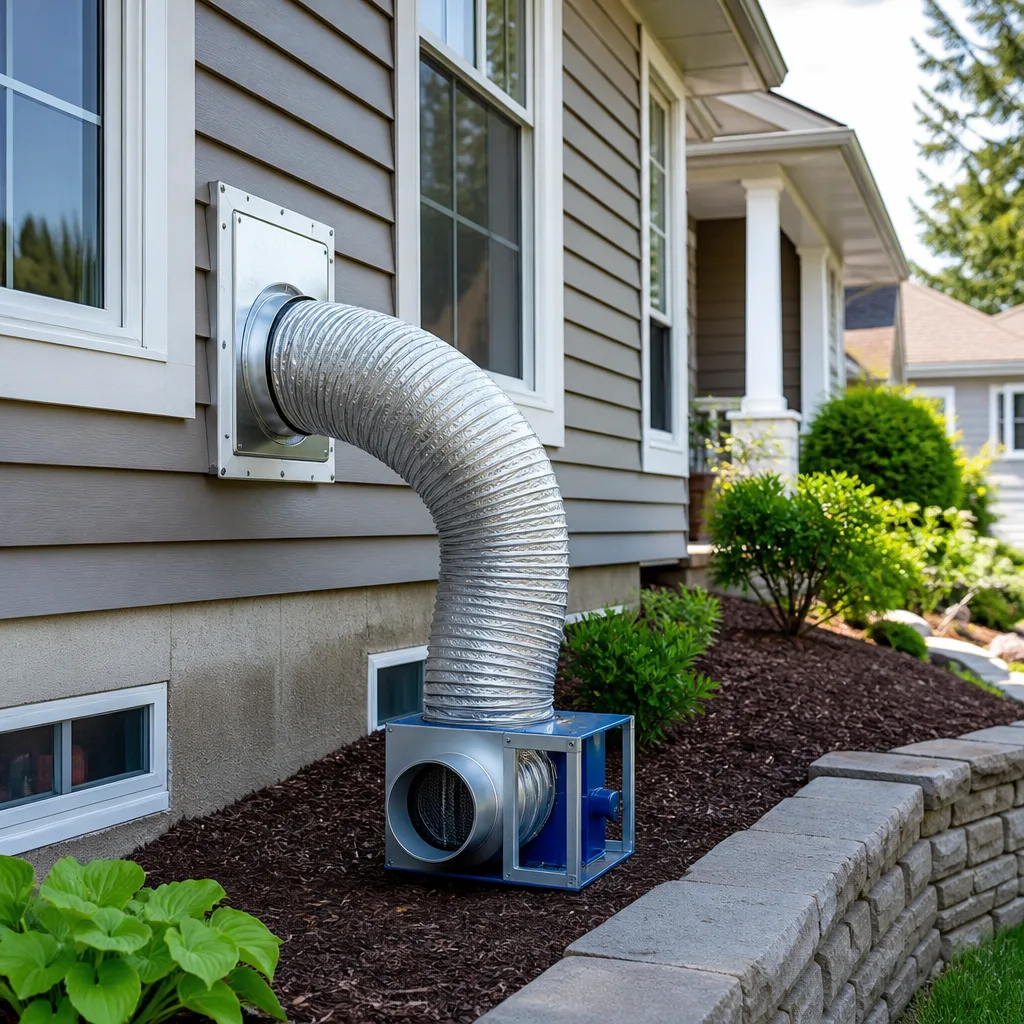 Whole-home duct cleaning
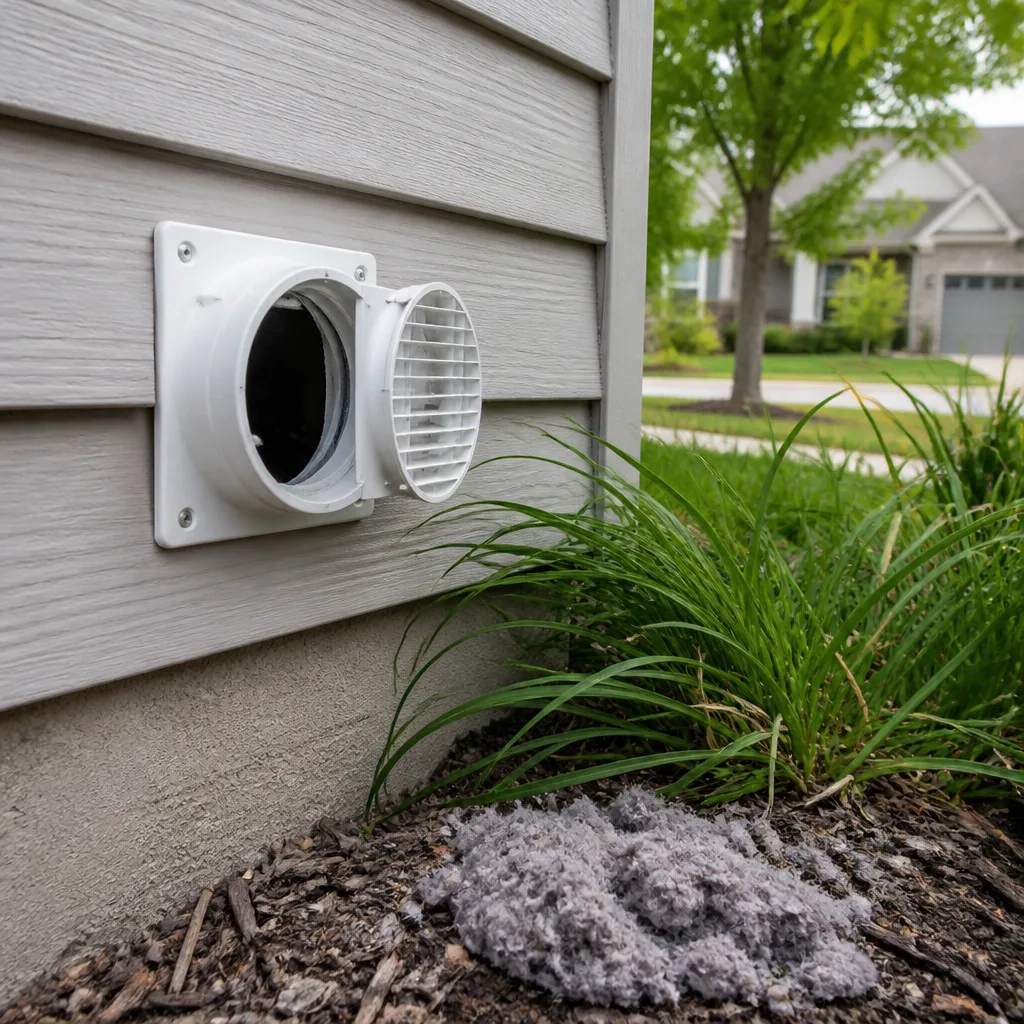 Dryer vent cleaning
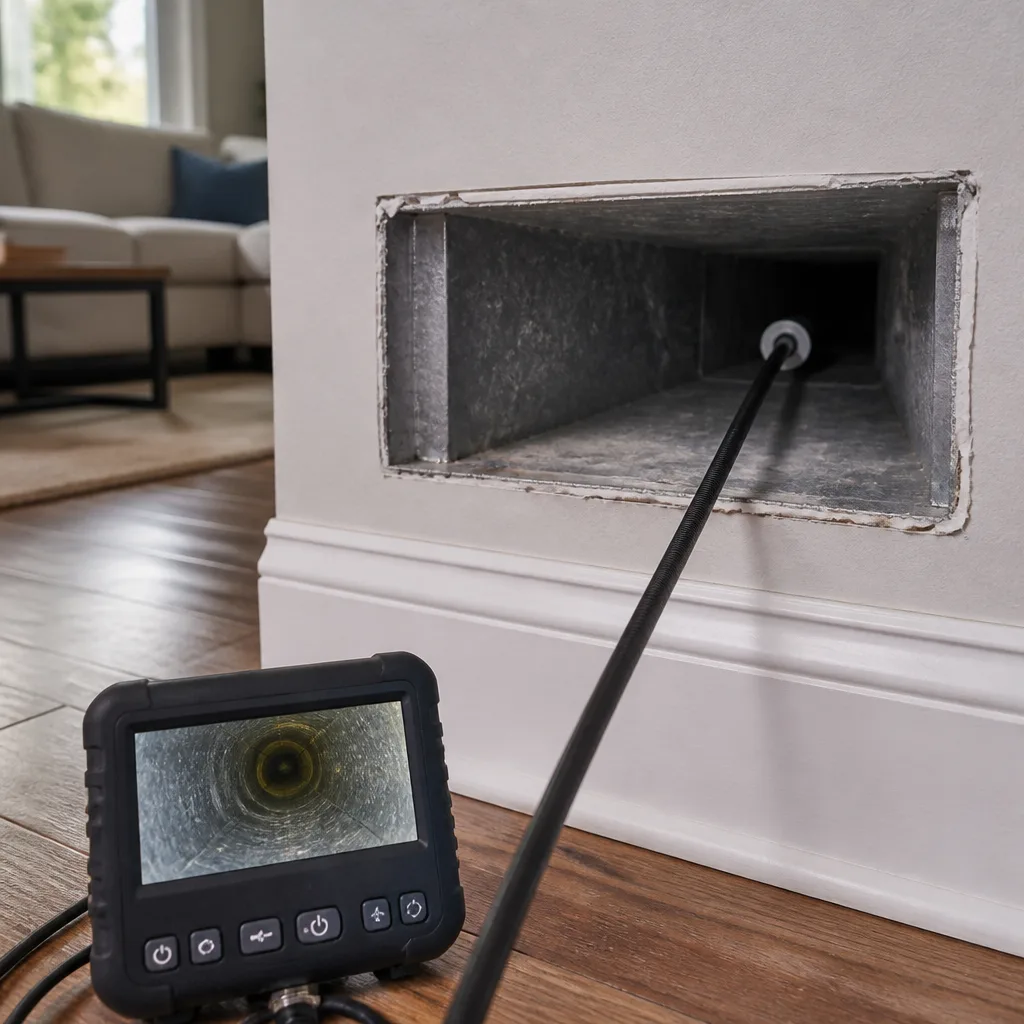 Camera inspection
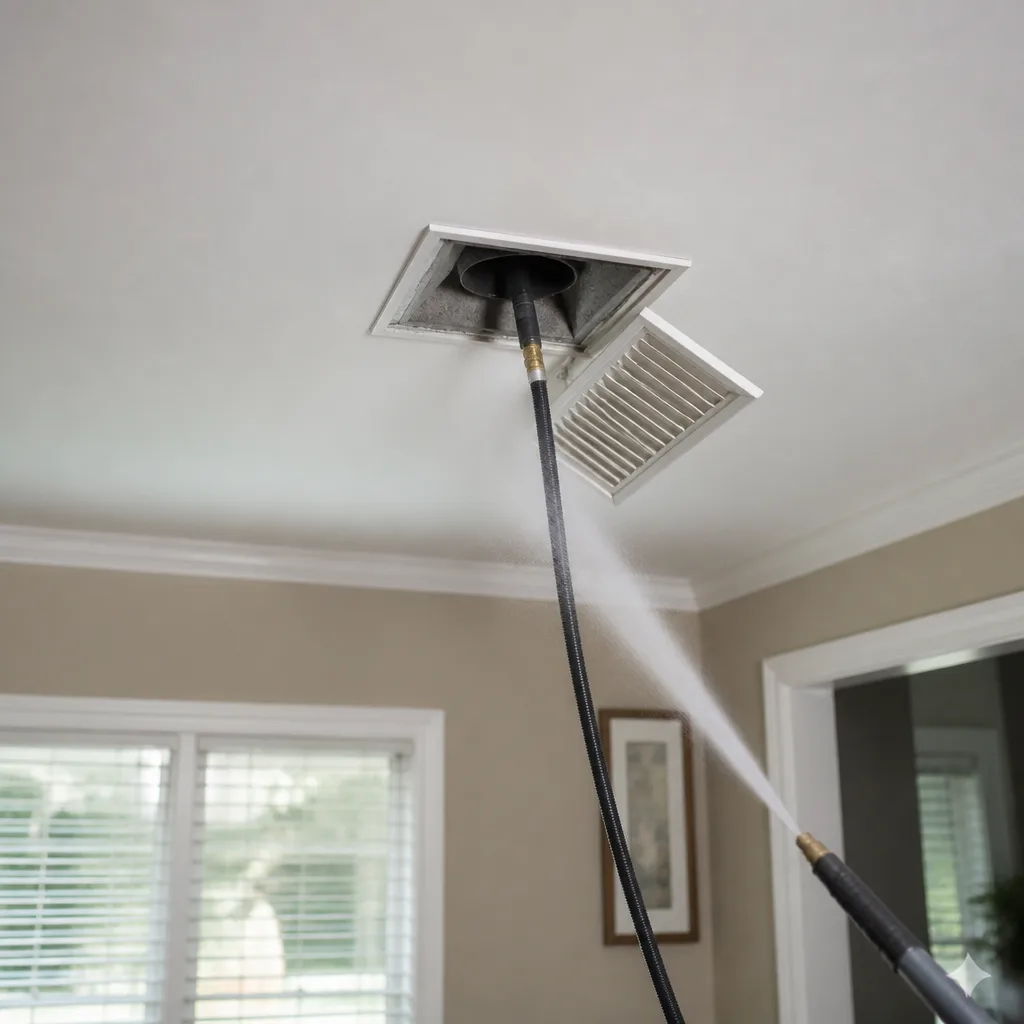 Sanitizing & deodorizing
Whole-system duct and dryer vent check with before-and-after photos - you see exactly what came out of your vents
That "$99 whole-house special" is a bait ad - the real number appears once they are in your hallway, or the "clean" is a shop-vac at the register. We photograph the inside of your ducts before and after instead.
How to Hire an Air Duct Cleaning Contractor in Clovis: A Step-by-Step Guide
Here’s a number most Clovis homeowners never hear: California does not require a state license to clean air ducts. That $99 whole-house coupon on your fridge? It’s a business model, not a price. The company makes its money on upsells once the technician is inside your home and you have no frame of reference to evaluate them. This guide exists to give you that frame of reference before you ever pick up the phone. We’ll walk through the equipment questions that separate real duct specialists from crews with a shop vac and a ladder, how to verify credentials that actually mean something, and how to structure your quote request so you’re comparing identical scopes. If you live in Clovis, where summer dust and agricultural particulate make duct contamination a year-round reality, the stakes are higher than most markets.
Quick Answer
To hire an air duct cleaning contractor in Clovis, verify their equipment (negative air machine with HEPA filtration, not a portable shop vac), check for NADCA membership and ask what it requires of them, request a quote structured by linear feet and specific components, and know whether they can handle repairs if the inspection turns up damage. The right contractor is a full-scope duct specialist, not a cleaning-only crew with a coupon.
Styles & brands we work with
- Whole-home duct cleaning
- Dryer vent cleaning
- Camera inspection
- Sanitizing & deodorizing
Table of Contents
- Why California’s No-License Reality Puts the Burden on You
- The Five Equipment Questions That Expose a Coupon Crew
- What NADCA Membership Actually Means (and What It Doesn’t)
- Why “Cleaning Only” Contractors Can Leave You With Half a Job
- How to Structure a Quote Request So You’re Comparing Apples to Apples
- Contract Language Red Flags You Should Never Sign Past
- What Clovis Homeowners Specifically Deal With in Their Ducts
- How to Verify the Work Was Actually Done
Why California’s No-License Reality Puts the Burden on You
California’s Contractors State License Board regulates plumbers, electricians, and HVAC contractors. Air duct cleaning, as a standalone service, falls outside mandatory licensing. That means anyone with a van, a portable vacuum, and a Craigslist ad can legally market themselves as a duct cleaning company in Clovis. There is no state exam on airflow dynamics, no required training on negative pressure containment, and no regulatory body checking whether the equipment can actually extract what it claims to remove.
This flips the hiring dynamic entirely. With a plumber or electrician, you can check a license number against a state database. With duct cleaners, you are the verification system. The burden lands on the questions you ask before booking, not on any credential the state requires them to hold.
This is not to say every unlicensed operation is bad. Some legitimate specialists operate without state HVAC licenses because their scope is cleaning, not system installation. But the absence of a mandatory baseline means the gap between the best and worst operators in Clovis is wider than in almost any other home service trade. We’ve walked into homes after a $79 “special” where the previous company spent forty minutes in the attic and handed the homeowner a receipt. Nothing was extracted because nothing capable of extraction was on the truck.
What to Check Instead of a License
- Insurance specifics: Ask for general liability coverage in writing. A company that hesitates on this question is telling you something about how they operate.
- NACAD membership status: Verify it on the NADCA website, not on the contractor’s marketing materials. Membership numbers can be checked.
- Equipment disclosure: Ask what machine they bring. If the answer is vague, that’s an answer.
- Repair capability: Ask what happens if they find a disconnected duct or crushed run during cleaning. A cleaning-only company will document it and leave. A specialist fixes it.
For a deeper look at what a legitimate cleaning scope involves in this area, see our Air Duct Cleaning in Clovis page.
The Five Equipment Questions That Expose a Coupon Crew
Professional duct cleaning runs on two core pieces of equipment: a negative air machine that creates vacuum pressure throughout the duct system, and an agitation tool that mechanically dislodges debris from duct walls. Without both, you’re paying for a superficial pass. Here are the five questions to ask before booking, and what the answers reveal.
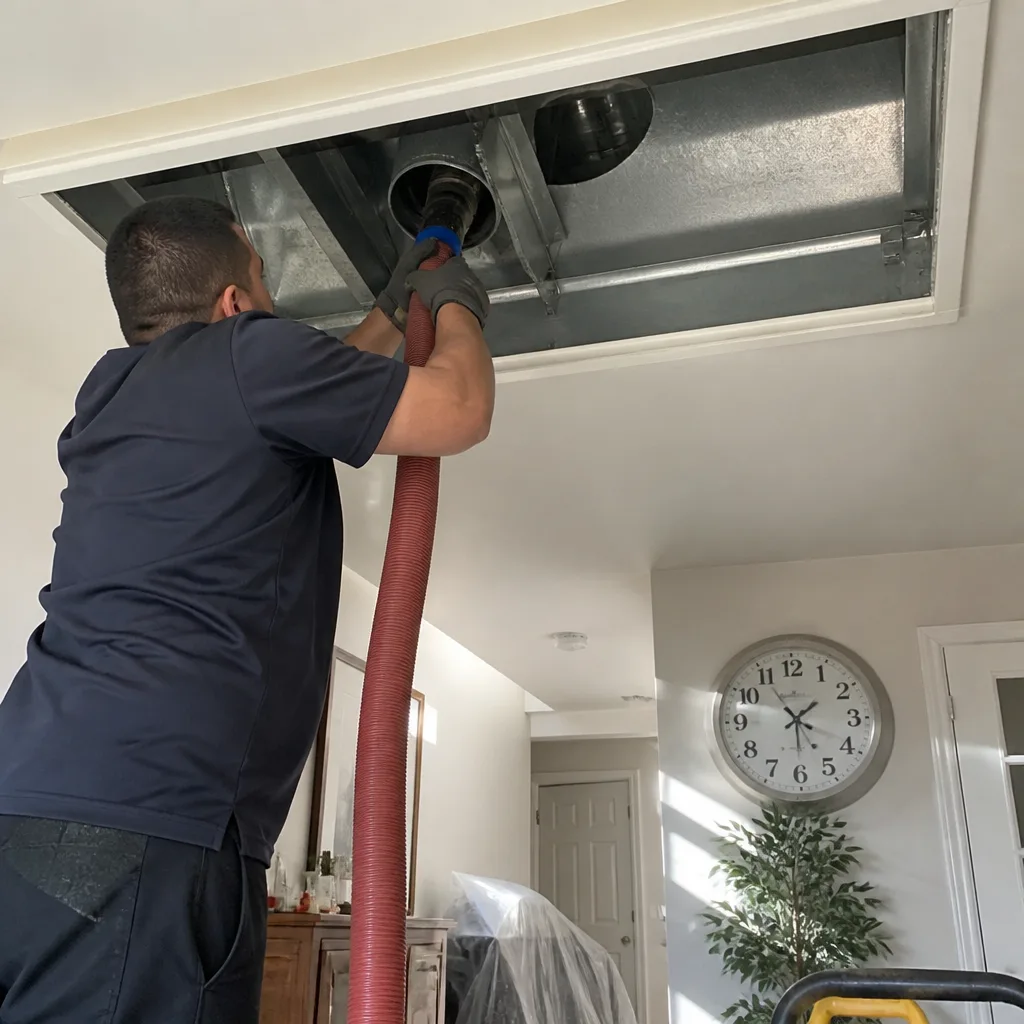
- What is the CFM rating on your negative air machine? CFM (cubic feet per minute) measures how much air the vacuum pulls. Restoration-grade equipment typically runs between 2,000 and 6,000 CFM with HEPA filtration. A portable shop vac produces a fraction of that. If the contractor cannot state a CFM number without pausing, they’re not running a negative air setup at all. In our operation, we run Nikro HEPA-filtered systems, the same class of equipment used in fire and flood restoration work where contaminated particulate removal is non-negotiable.
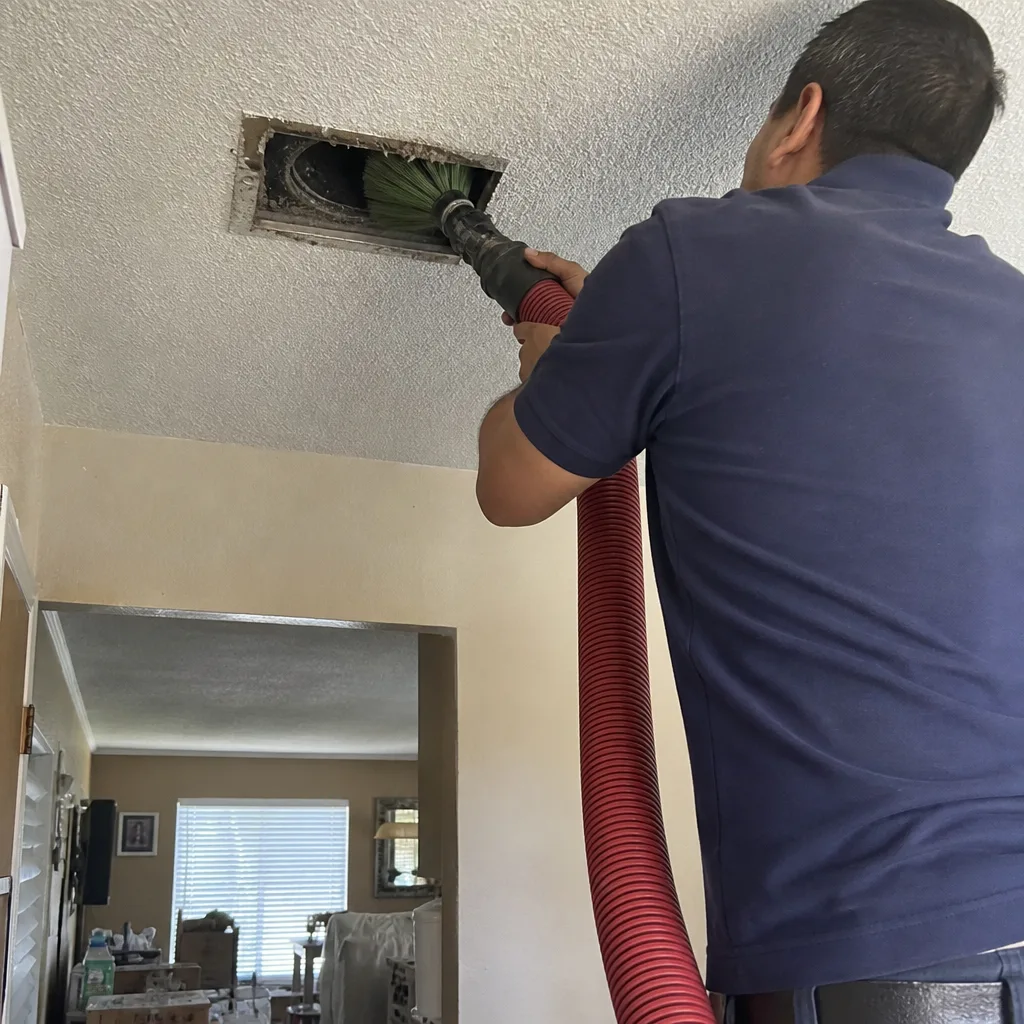
- Are you using a contact agitation system or just vacuuming? Vacuum alone removes loose debris sitting in the duct. It does not remove the caked-on dust, pet dander, and biofilm that adheres to duct walls. That requires mechanical agitation: brushes that make physical contact with the duct surface while under negative pressure. We use Rotobrush brush-contact extraction tools for this reason. The brush dislodges; the vacuum captures. If a company’s method is “we vacuum the vents from inside the home,” they’re cleaning registers, not ducts.
- Do you carry a borescope or inspection camera? Any contractor who cleans without first looking inside the ducts is working blind. A borescope camera lets the technician see what’s actually in your ductwork before and after. It’s also the foundation of the post-job deliverable: photographic proof. A company that doesn’t offer before-and-after visuals is asking you to trust them without evidence.
- Does your vacuum exhaust outside or back into the home? This is a technical question that separates professionals from amateurs. A proper setup vents the vacuum exhaust outside the home envelope. A machine that exhausts indoors is recirculating the fine particulate it’s supposed to be removing. In Clovis, where agricultural dust and construction particulate are constant atmospheric inputs, recirculating exhaust defeats the entire purpose.
- What happens to the debris after extraction? Professional crews bag and remove extracted material through a sealed system. If the answer involves “we sweep it up” or “it goes back through the system,” walk away.
What NADCA Membership Actually Means (and What It Doesn’t)
NADCA, the National Air Duct Cleaners Association, is the industry’s primary trade organization. Membership signals a baseline commitment to professional standards, but it’s important to understand what it does and does not guarantee.
What NADCA Membership Requires
- Adherence to the ACR Standard: NADCA’s Assessment, Cleaning, and Restoration standard defines what a proper cleaning involves. It specifies that cleaning must include the entire HVAC system: supply ducts, return ducts, registers, grilles, coils, and the air handler. A company claiming NADCA compliance but quoting a “vents-only” job is contradicting the standard.
- Certified technicians: NADCA offers the ASCS (Air Systems Cleaning Specialist) certification. It requires passing an exam and completing continuing education. Members are expected to maintain certified staff.
- A code of ethics: NADCA members agree to honest marketing. The $99 whole-house coupon that transforms into a $1,200 bill during the visit would violate that code.
What NADCA Membership Does Not Mean
- It does not mean the company is good at the work. Membership establishes a floor, not a ceiling. Some NADCA members do mediocre work.
- It does not mean the company can handle repairs. NADCA certification covers cleaning methodology, not duct fabrication or sealing. A NADCA-certified cleaner may have zero repair capability.
- It does not replace verification. Always check the NADCA website directly. Companies have been caught claiming membership they don’t hold.
In short: NADCA membership is a strong positive signal. It should be near the top of your screening criteria. But it’s a screening criterion, not a conclusion.
Why “Cleaning Only” Contractors Can Leave You With Half a Job
Here’s a scenario we encounter regularly in Clovis homes: a homeowner books a cleaning, the technician opens an access panel, and finds a disconnected return duct. The run has pulled apart at a seam, meaning the system has been pulling attic air (and whatever’s in it) directly into the home for months. A cleaning-only contractor documents the finding on the invoice and tells the homeowner to call an HVAC company. The homeowner now has to hire a second contractor, pay a second diagnostic fee, and coordinate a second appointment.
A full-scope duct specialist handles both sides of that finding. The cleaning removes the accumulated contamination. The repair reconnects and seals the run, often with a product like Guardsman protective sealant, restoring the system to proper function. One visit, one invoice, one company accountable for the result.
This matters in Clovis specifically because older homes throughout the area – particularly in established neighborhoods where original ductwork is now thirty or forty years old – commonly show seam separation, crushed flex runs, and poorly sealed return cavities. Age and attic heat degrade duct connections over time, and the temperature swings between Clovis summers and winter nights accelerate that process.
The question to ask is simple: “If you find damage during cleaning, can you repair it on the same visit?” If the answer is no, you’re hiring a partial solution. For a full picture of what repair work involves, read our Air Duct Repair in Clovis page.
How to Structure a Quote Request So You’re Comparing Apples to Apples
The most common mistake homeowners make when requesting duct cleaning quotes is asking for a price without defining scope. Two quotes can differ by $400 and look identical on paper because one contractor is quoting ten supply runs and the other is quoting sixteen, or one includes the return side and the other doesn’t. Here’s how to structure a request that forces every bidder to price the same job.
- Ask for pricing by linear feet of ductwork, not by “system” or “home size.” Linear footage is the objective measure of what’s being cleaned. A two-story home with extensive duct runs costs more than a single-story home of the same square footage because there’s simply more duct to clean.
- List the exact components included: supply ducts, return ducts, registers and grilles, air handler/plenum, and any transition ducts. If you have a Honeywell or Aprilaire filtration system, specify that it’s part of the household setup and ask whether the quote includes integrating with it rather than working around it.
- Ask what the post-job deliverable is: will you receive photographs, a walkthrough, a written summary? A company that can’t commit to showing you what they extracted before they leave is not a company you want in your attic.
- Request confirmation of access points: how many access cuts will they make, and will they seal each one afterward? Some systems require cutting access ports for tooling. If those ports aren’t sealed properly, you’ve traded dirty ducts for leaky ones.
- Clarify what happens if the scope changes: if they find extra runs or a second trunk line that wasn’t in the original quote, how does pricing adjust? Will they stop and re-quote, or proceed and bill after?
A quote structured this way tells you three things. First, whether the contractor actually understands their own costs. Second, whether their process is systematic or improvisational. Third, whether they plan to stand behind a defined deliverable or leave things vague enough to argue about later.
Contract Language Red Flags You Should Never Sign Past
The coupon price gets them in the door. The contract language determines what you actually end up paying. These are the phrases that should make you stop and reconsider before signing anything.
- “Whole house cleaning” with no defined scope. What does “whole house” mean? How many ducts? Which components? If the contract doesn’t specify linear feet or enumerate the components, the contractor can define “whole house” any way they want when they arrive.
- No mention of access points or seal-up. Professional cleaning often requires cutting access holes in ductwork. If the contract doesn’t state that these will be cut, cleaned, and sealed to professional standards, you may find yourself with unsealed access holes that leak conditioned air into your attic.
- No written guarantee of what happens if contamination remains. What recourse do you have if, two weeks later, a borescope inspection shows significant debris still coating the ducts? A legitimate contractor addresses this upfront. A coupon crew hopes you never look.
- Upsell pressure written into the pricing structure. Watch for line items that say “additional charges may apply based on technician assessment.” That’s a blank check. A fixed-scope quote with defined contingencies is fine. An open-ended “assessment” clause is a signal that the upsell is built into the visit.
- Exclusions buried in fine print. “Air handler not included.” “Return side not included.” “Second floor not included.” If a component of your system is excluded, it should be in the main body of the quote, not a footnote. Buried exclusions are the mechanism that allows a $99 quote to become a $900 invoice.
We’ve replaced work from companies that used every one of these tactics. The pattern is consistent: a low front-end price, a vague contract, and a technician incentivized to sell add-ons during the visit. The homeowner ends up paying more than they would have paid a full-scope specialist who quoted honestly from the start.
What Clovis Homeowners Specifically Deal With in Their Ducts
Every market has its own particulate profile. In Clovis, the composition is shaped by three recurring factors: agricultural activity in the surrounding Central Valley, seasonal wind patterns that carry fine particulate across the region, and the simple fact that homes here run air conditioning for much of the year, pulling outside air through the system continuously.
The result is that Clovis ducts accumulate a specific type of contamination. It’s not just household dust. It’s a fine, gritty particulate that settles deep in return ducts and clings to duct walls. Combined with normal household contributors – pet dander, skin cells, textile fibers – it forms a residue that resists simple vacuum extraction. Contact agitation is not optional in this market; it’s the only method that actually removes what’s there.
We also see a pattern in homes near active agricultural land: filtration systems load up faster. If you run a whole-home filtration setup through a Honeywell or Aprilaire system, the filter is doing real work capturing that particulate before it reaches your living space. But that same filter becomes a bottleneck when it loads, and downstream ductwork still collects what gets through. Regular cleaning intervals matter more here than in coastal markets.
How to Verify the Work Was Actually Done
The final step in hiring a duct cleaning contractor in Clovis is verifying the result. This is where the difference between a legitimate operation and a coupon crew becomes painfully obvious, because you can’t see inside your ducts. Well, you can’t see inside them without the right tools. A professional crew brings those tools and shows you the evidence.
What a Proper Post-Job Verification Looks Like
- Before-and-after borescope photos: these should show the same section of duct, before cleaning and after. Not different sections. The same section, same angle. This is the only visual evidence that means anything.
- A physical walkthrough of the equipment: if the job is done properly, the technician should be able to show you the extracted debris – the actual material pulled from your ducts – before disposal.
- Sealed access points: if access cuts were made, each one should be visible and sealed. You should be able to inspect them.
- A written report of findings: what was found, what was cleaned, what condition the ducts are in, and any recommendations for repairs or future maintenance.
If a company completes the job and hands you only a receipt, you have not received verification. You’ve received a bill. The evidence standard is part of what separates professional duct remediation from a chore. For more on what a complete cleaning includes, visit our Air Duct Cleaning in Clovis page.
Common Mistakes to Avoid
- Hiring on price alone. The $99 coupon exists to get a technician inside your home. The real revenue comes after. A legitimate company prices the job based on the work, not the marketing hook.
- Not asking about equipment before booking. If you don’t know what machine will be used on your ducts, you’re hiring blind. Ask for CFM ratings and method specifics.
- Assuming “licensed and insured” means duct cleaning is regulated. It’s not. California doesn’t require a specific duct cleaning license. “Licensed” might refer to a general business license that requires no technical competency.
- Comparing quotes without defining scope. Two prices without identical scope are meaningless. Structure your request with linear feet, components, and deliverables.
- Hiring a cleaning company that can’t handle repairs. If your inspection reveals damage, you’ll pay twice: once for the cleaning, once for a second contractor to fix what the first one found.
- Skipping the post-job verification. No before-and-after photos, no evidence of extraction, no sealed access points. If the contractor can’t show you the work, consider the work unverified.
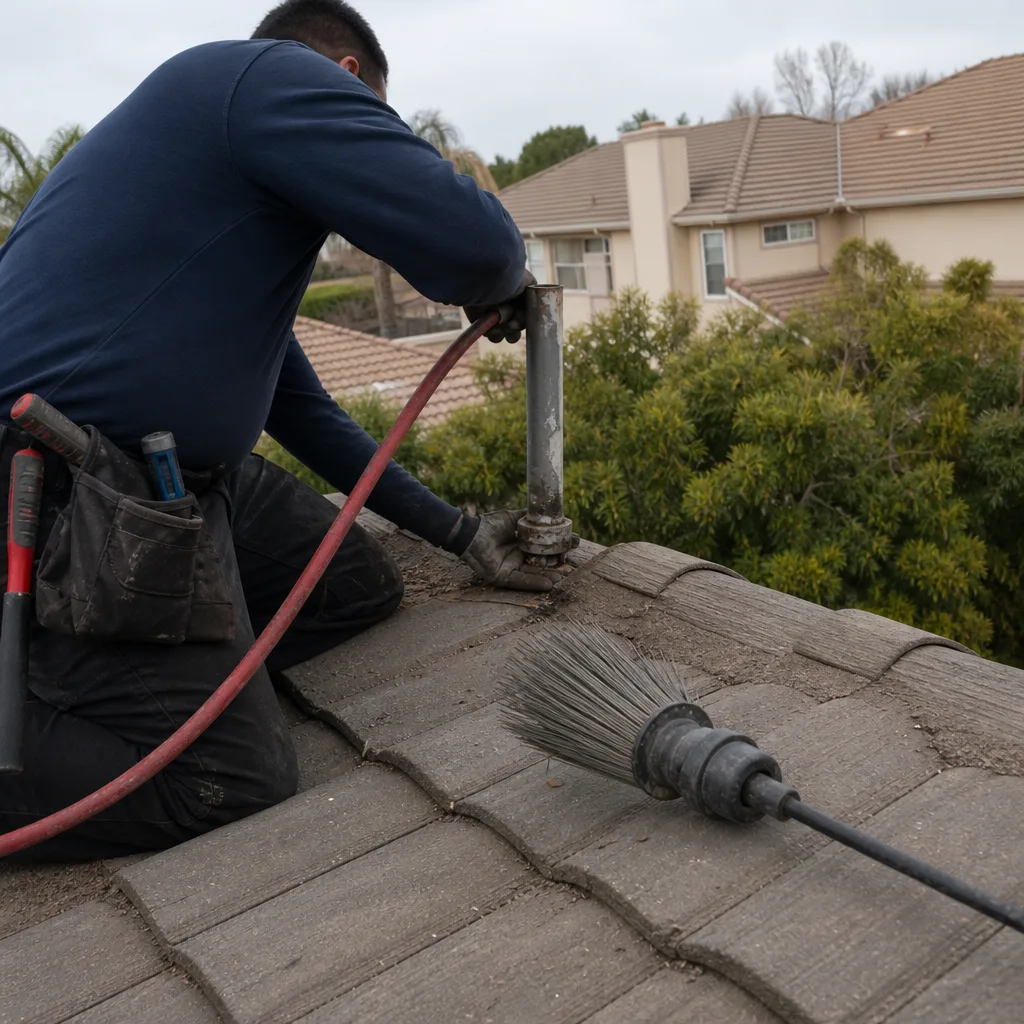
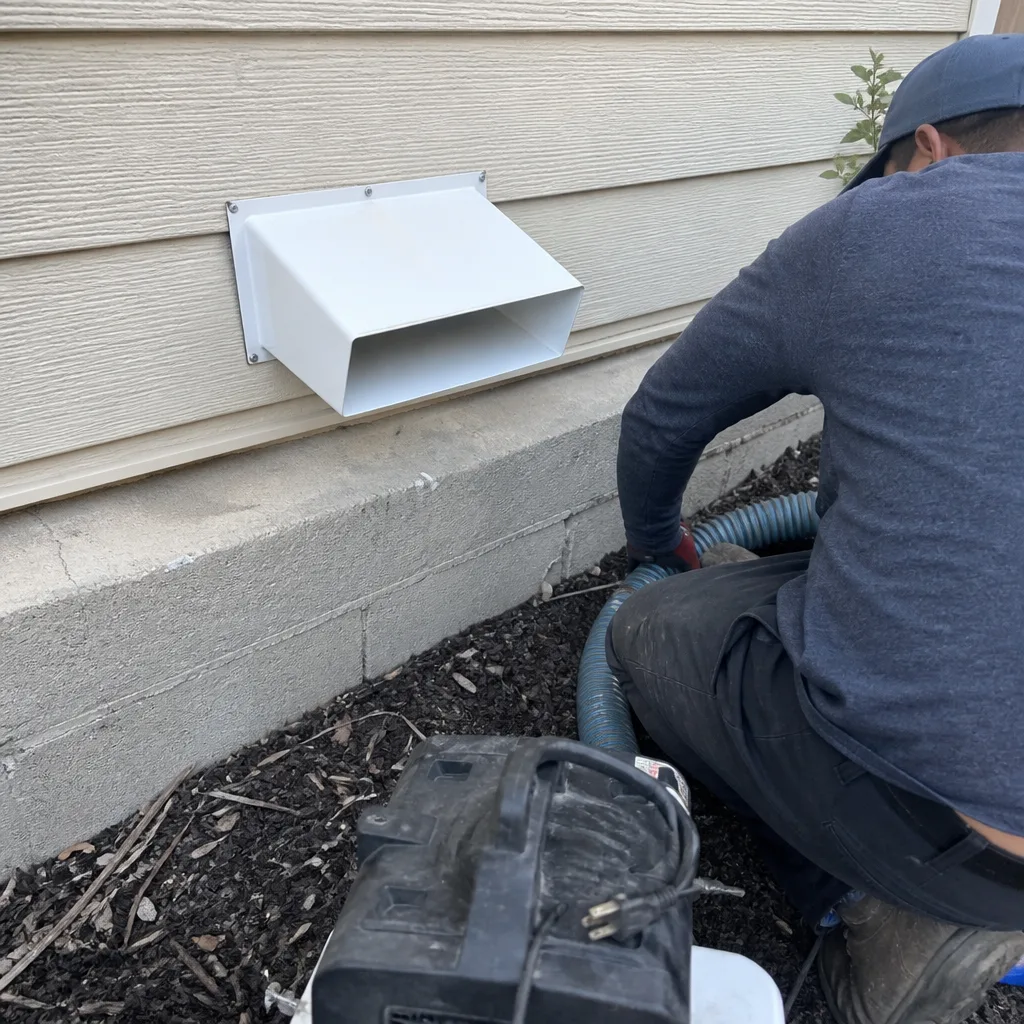
- Ignoring dryer vents as part of the picture. Lint buildup in dryer vents is a leading cause of residential dryer fires. It’s not a comfort issue; it’s a safety issue. For specifics, see our Dryer Vent Cleaning in Clovis page.
See the difference
 Before
 After
 Before
 After
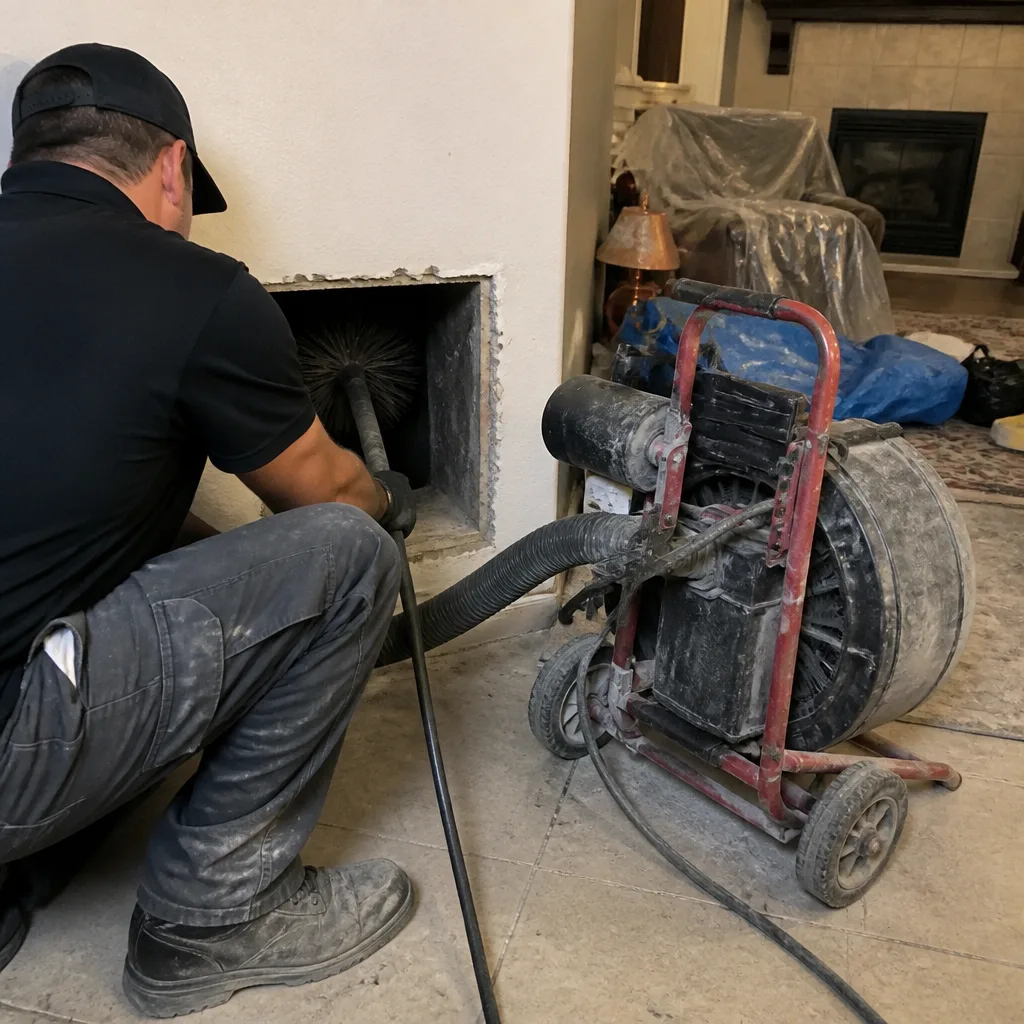 Before
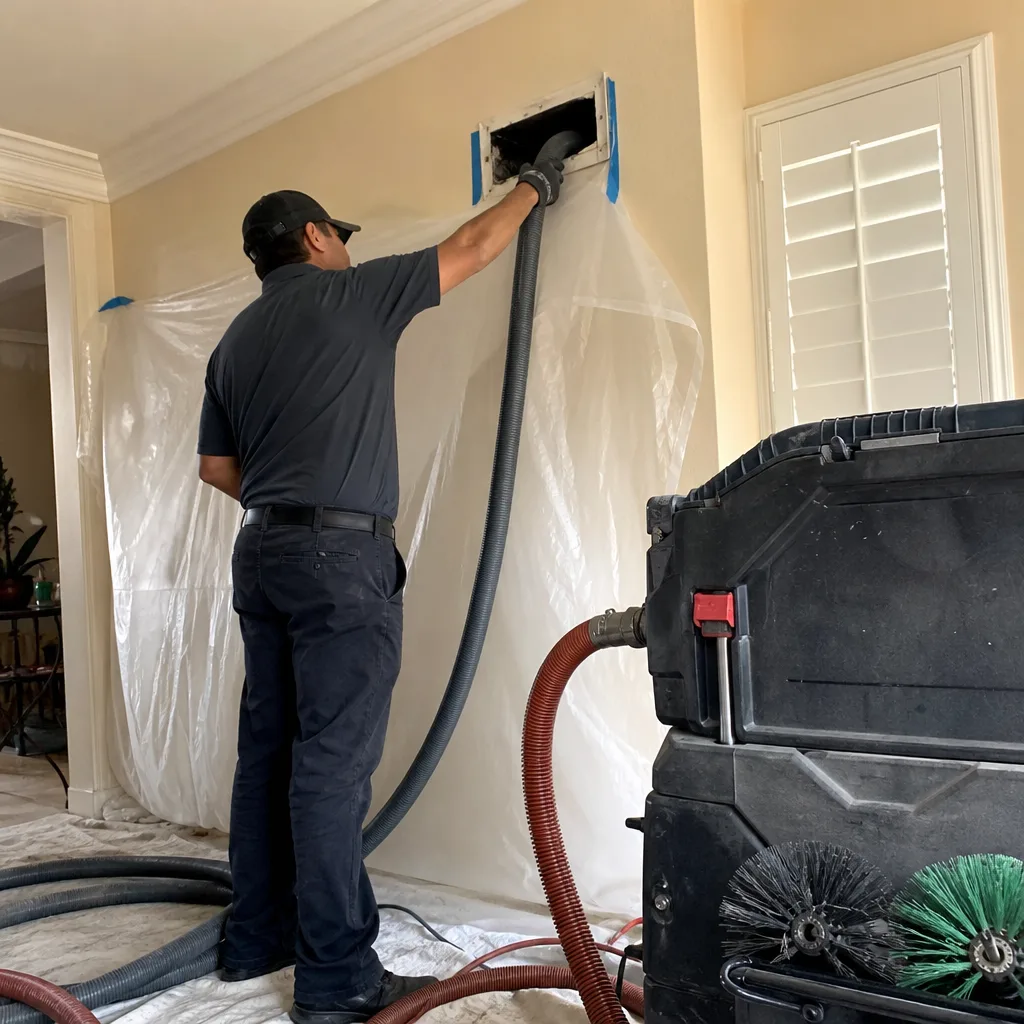 After
When to Call a Professional
Some duct cleaning projects are better handled by professionals from the start. If you see visible dust blowing from registers when the system runs, notice a persistent musty odor that doesn’t respond to standard cleaning, or have family members whose allergy symptoms worsen at home, that’s a signal that what’s in your ducts is not surface-level debris. If you’ve had construction or renovation work done in the home, drywall dust and debris have likely entered the duct system. If you’ve never had the ducts cleaned and you can’t remember the last time anyone looked inside them, that’s a professional assessment waiting to happen. This guide is designed for homeowners who want to understand the hiring process before they call. Duct Cleaning Clovis offers structured estimates that define scope before work begins. Call (855) 661-0630 to schedule a consultation.
Frequently Asked Questions
In Clovis, a legitimate whole-system air duct cleaning typically ranges from $300 to $700 for a standard single-family home, depending on the number of linear feet, system configuration, and accessibility. Quotes below $150 should be treated as marketing hooks, not honest pricing. Call (855) 661-0630 for a structured estimate based on your home’s specific ductwork.
Cheap quotes usually reflect a different scope of work. A $99 coupon typically covers a limited number of vents with no return side, no air handler, and no contact agitation – essentially a superficial pass. The full price is revealed after the technician arrives and the upsell begins. An honest quote includes the entire system from the start.
Request before-and-after borescope photos of the same duct sections, ask to see the extracted debris, and inspect any access points that were cut and sealed. If the contractor cannot provide visual evidence, the work should be considered unverified. Professional crews document the job because the evidence is part of the deliverable.
NADCA recommends cleaning every three to five years, though homes in Clovis with high agricultural particulate loads, pets, or residents with respiratory conditions may benefit from shorter intervals. A visual inspection with a borescope camera is the honest way to determine whether your ducts have reached a point where cleaning is warranted. Call (855) 661-0630 to discuss what’s appropriate for your home.
No law requires air duct cleaning before a sale in Clovis or anywhere in California. However, inspection reports sometimes flag visible duct contamination, and some buyers request cleaning as a condition of sale. The market relevance is comfort and air quality, not legal compliance.
Most cannot. Cleaning-only contractors identify damage but refer repairs to separate HVAC companies, which means two appointments and two invoices. A full-scope duct specialist handles both cleaning and Air Duct Repair in Clovis on the same visit, which matters when inspection reveals disconnected runs, crushed flex ducts, or leaking seams.
The Bottom Line
Hiring an air duct cleaning contractor in Clovis comes down to questions most homeowners never ask. What equipment is on the truck? What method is used to agitate and extract? What happens if the inspection finds damage? Can the company repair what it finds? The California regulatory landscape puts the verification burden entirely on you, which means the questions you ask before booking are your only real protection. A legitimate operator answers them directly. A coupon crew deflects. Structure your quote request around linear feet and defined scope, demand photographic proof when the job is done, and hire a full-scope specialist who can clean and repair in the same visit. That’s the difference between a service that changes what’s in your ducts and one that just changes what’s on your receipt.
Written by the team at Duct Cleaning Clovis, serving Clovis since 2012.