
Last updated November 2, 2026
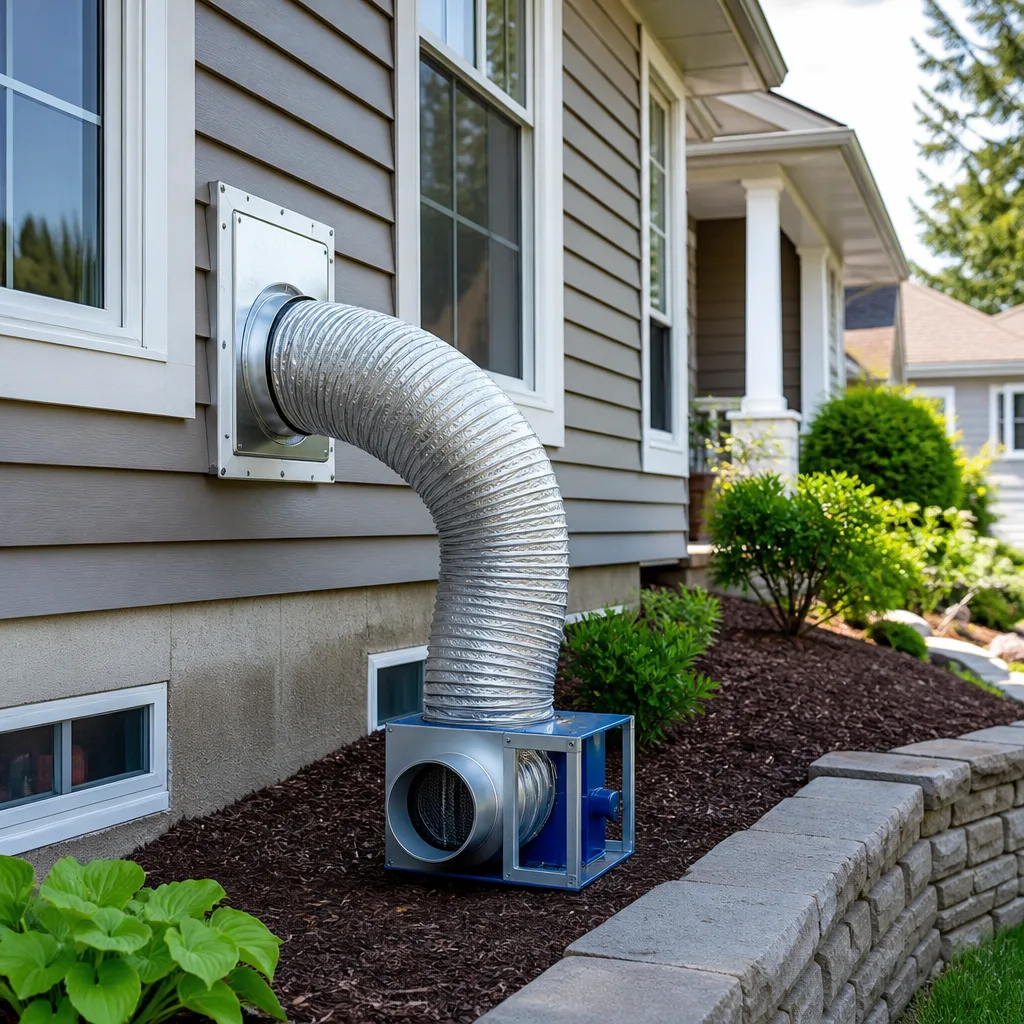 Whole-home duct cleaning
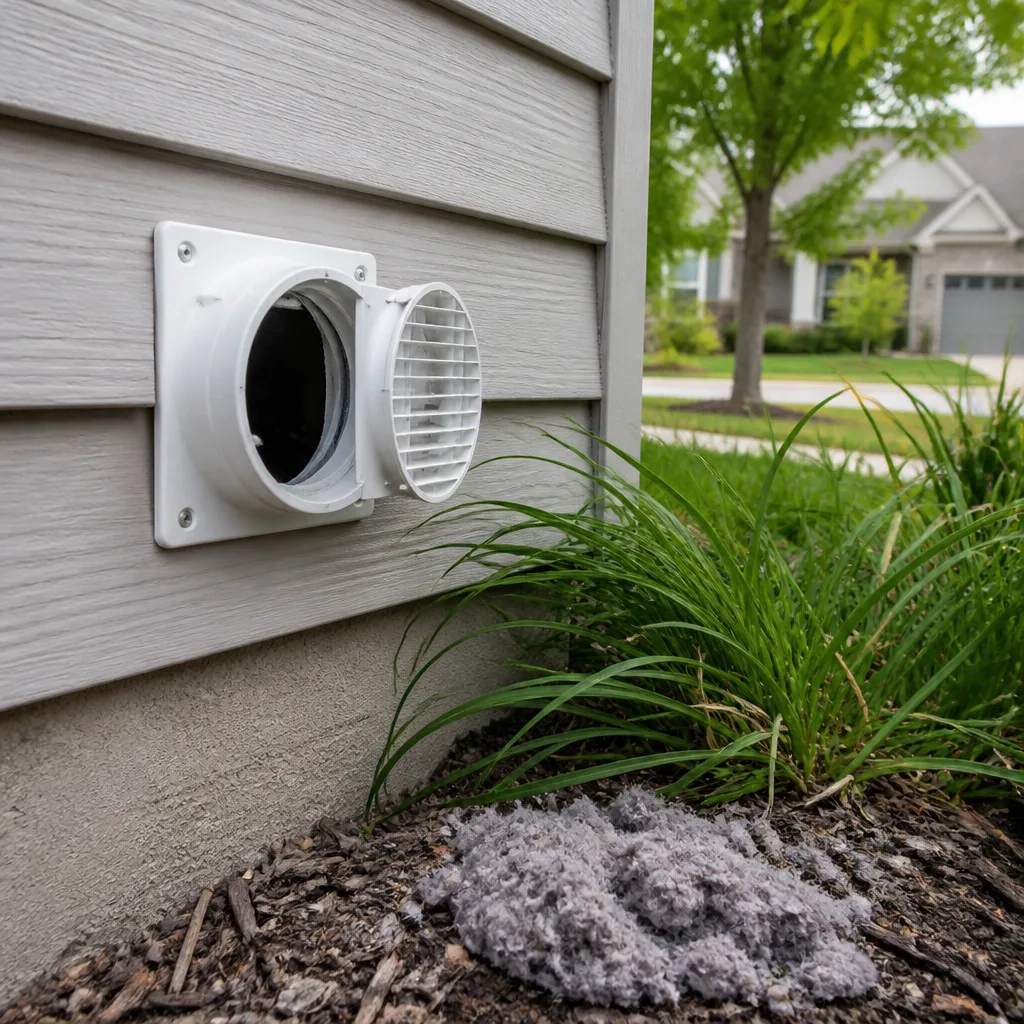 Dryer vent cleaning
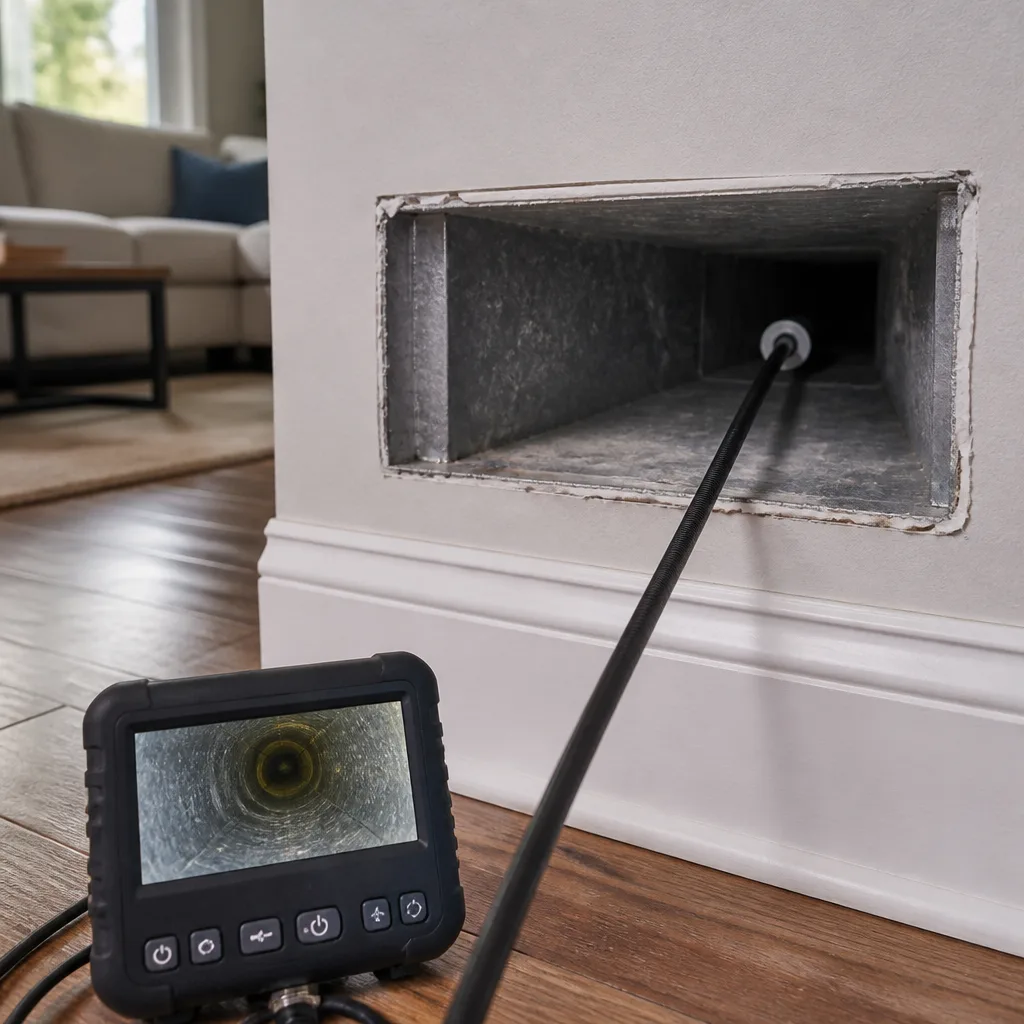 Camera inspection
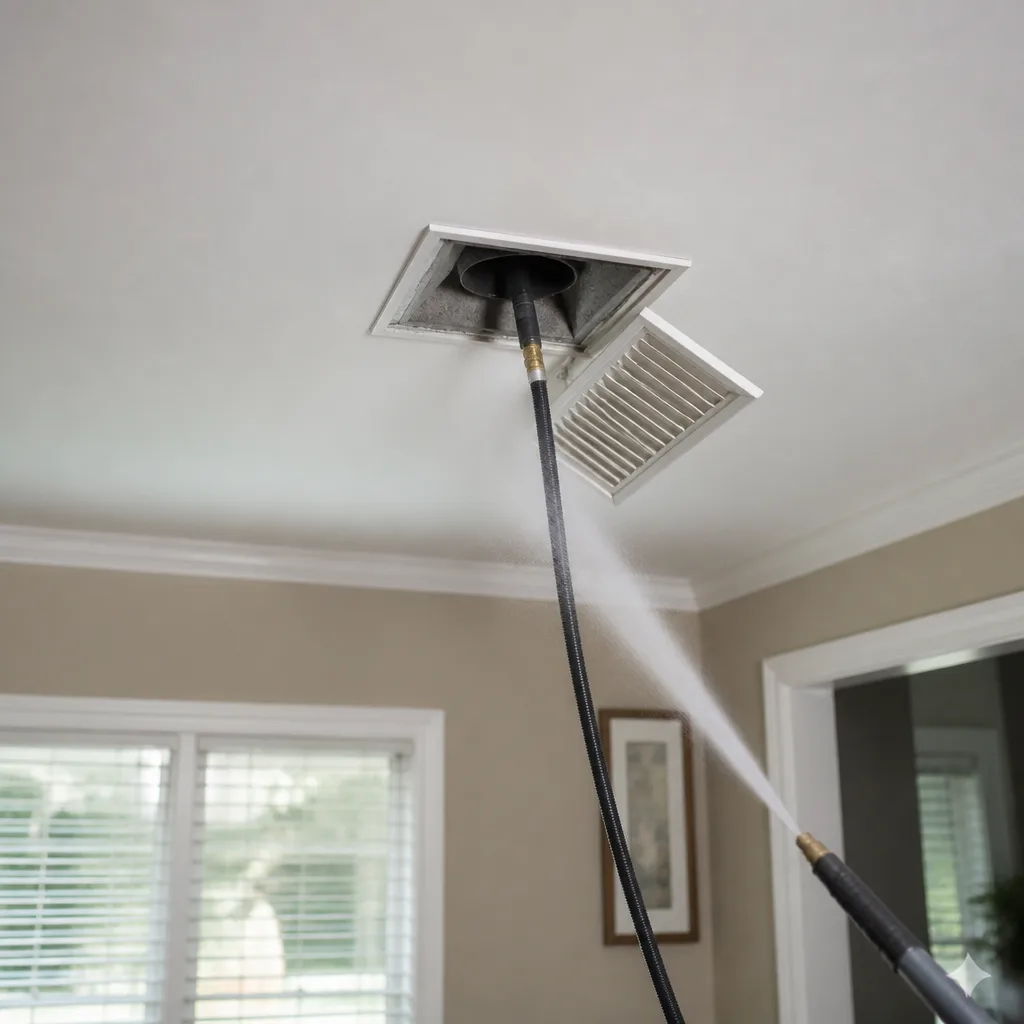 Sanitizing & deodorizing
Whole-system duct and dryer vent check with before-and-after photos - you see exactly what came out of your vents
That "$99 whole-house special" is a bait ad - the real number appears once they are in your hallway, or the "clean" is a shop-vac at the register. We photograph the inside of your ducts before and after instead.
Air Duct Cleaning Emergency Preparedness Guide for Clovis Homes
In September 2020, the Creek Fire pushed Clovis air quality to AQI readings above 500, and thousands of homeowners unknowingly ran their HVAC systems through the worst of it. What most still don’t realize is that their ductwork became a filtration archive: smoke particulate, ash, and fine carbon settled into duct lining, return plenums, and air handler coils, where it remained long after the sky cleared. This guide covers the duct emergencies that actually hit Clovis homes most often: post-wildfire smoke contamination, rodent intrusion during heat-driven displacement, and water entry after roof or attic events. You’ll learn the specific protocols that prevent permanent contamination, what professional remediation actually requires, and how to document damage for insurance.
Quick Answer
Air duct emergencies in Clovis fall into three categories: wildfire smoke contamination, rodent intrusion, and water entry. During any smoke event, set your HVAC to recirculation mode and shut the system down entirely when AQI exceeds 300; after the event, schedule a professional duct inspection before resuming normal operation. For rodent intrusion or water entry, shut the system down immediately, contain the affected area, and call a duct specialist who can extract contamination and repair damage, not just clean around it.
Styles & brands we work with
- Whole-home duct cleaning
- Dryer vent cleaning
- Camera inspection
- Sanitizing & deodorizing
Table of Contents
- Wildfire Smoke Protocol: What to Do During and After a Clovis Smoke Event
- Rodent Intrusion Response: Why It’s Remediation, Not Cleaning
- Water Intrusion: The 48-Hour Window That Determines Everything
- Insurance Documentation: What Your Assessment Must Include
- Pre-Season Emergency Prep: The One Inspection That Prevents Most Emergencies
- Why Equipment Matters in Emergency Duct Work
- Common Mistakes to Avoid
- When to Call a Professional
Wildfire Smoke Protocol: What to Do During and After a Clovis Smoke Event
Clovis sits downwind of some of the most aggressive wildfire zones in California, and smoke events are no longer seasonal anomalies, they’re annual occurrences. When AQI climbs past 150, the decisions you make about your HVAC system in the next 48 hours determine whether you’ll need duct cleaning, or duct replacement.
During the Event: Settings That Protect Your Ductwork
Most homeowners assume a running HVAC system with a good filter protects indoor air. That assumption is wrong in a heavy smoke event. Here’s what actually happens: your system pulls outside air through fresh-air intakes and small gaps in the return path, and that air carries particulates measuring 0.3 to 2.5 microns, precisely the size that embeds into fiberglass duct liner and coil fins. A standard 1-inch filter catches maybe 30 to 40 percent of that load. The rest coats your ducts.
Follow this sequence when AQI exceeds 150:
- Switch your thermostat to recirculation mode. This closes the fresh-air damper on most modern systems and prevents direct outside air intake. If your system doesn’t have a dedicated recirculation setting, run the fan in “On” mode continuously. This keeps air moving through your filter rather than pulling in new contaminated air.
- Shut the system down entirely at AQI 300 or higher. At that threshold, even recirculation mode pulls enough particulates through micro leaks to coat your ducts in a matter of hours. The long-term cost of contamination far outweighs the short-term discomfort.
- Upgrade your filter before the event if you’re in a smoke-prone area. A MERV 13 filter captures far more smoke particulate than standard MERV 8. But there’s a caveat: many older Clovis homes have systems that can’t handle the pressure drop from higher-MERV filters, which reduces airflow and strains the blower. If you’re not sure whether your system can accommodate MERV 13, ask a technician before installing one.
- Do not run portable fans in attics or garages during the event. These spaces draw in outside air through vents and soffits, pulling smoke particulate into areas adjacent to your duct runs. Once the smoke settles there, it gets drawn into small duct leaks every time your system cycles.
Post-Event: The Inspection Checklist
Once AQI returns below 100, you need a systematic check of your ductwork before you resume normal operation. Here’s the sequence we use on every post-smoke assessment:
- Visual inspection of return grilles and supply registers. Remove a return grille and look at the duct surface immediately behind it. If you see a dark film or brownish residue, that’s not household dust, that’s smoke particulate that has already begun to bond with the duct surface. What you see at the return is only a fraction of what’s deeper in the system.
- Check the blower compartment and filter slot. Smoke particulate collects heavily where airflow changes direction, which is exactly where the blower wheel and filter housing sit. A blackened filter is expected. A blackened blower wheel is a sign that substantial particulate has passed through the entire system.
- Inspect the evaporator coil if accessible. Smoke residue on coil fins reduces heat transfer efficiency and provides a sticky surface for future dust accumulation. On an older Clovis home with a 10-plus-year-old system, this coil may already be marginal, and smoke coating accelerates its decline.
- Smell test in cool mode. Run the system in cooling mode and pay attention to the first 10 minutes of airflow. A campfire smell that persists after the filter is changed indicates the odor has been absorbed into duct liner and coil surfaces, which cannot be resolved by filter changes alone.
If any of these checks come back positive, the right move is a professional duct cleaning that uses brush-contact extraction and HEPA-filtered vacuum, not a basic blower-and-vacuum service. Smoke particulate bonds to duct surfaces, and without mechanical agitation, it stays there.
For a full breakdown of what a proper cleaning process involves, see our page on Air Duct Cleaning in Clovis.
Rodent Intrusion Response: Why It’s Remediation, Not Cleaning
Clovis summers push rodents into homes looking for cool spaces, and ductwork is one of the first places they find. Attic ducts with soft insulation jackets, flex duct with small tears, and crawlspace returns with loose connections all offer entry points. Once inside, rodents nest in duct liner, leave droppings and urine throughout the runs, and sometimes die inside the system. This is not a dust problem. It’s a contamination problem, and it requires a different standard of response.
Identifying Rodent Intrusion in Your Ducts
The signs are usually obvious if you know what to look for:
- Odor that worsens when the system cycles on. Rodent urine produces a sharp ammonia smell that becomes more intense when airflow passes over dried deposits. A dead rodent produces a decaying odor that peaks and then fades as the body dries, but the contamination remains.
- Scratching or rustling sounds in duct runs at night. Attic ducts are convenient pathways for rodents moving between food sources and nesting areas.
- Rodent droppings at supply registers or inside return grilles. This is an active sign that animals are present or were recently, and the droppings themselves carry leptospirosis and other pathogens.
- Chewed duct material, especially on flex duct or insulation jackets. Rodents chew through duct walls, creating breaches that leak conditioned air into unconditioned zones and pull attic air into the living space.
What Professional Extraction Requires
This is where the difference between a cleaning service and a remediation service becomes clear. Removing rodent contamination from ductwork requires:
- HEPA containment protocols. The work area must be isolated so that disturbed droppings and particulate do not spread into living spaces during extraction. The same approach restoration crews use for category 2 water damage applies here, because the contaminants are similarly hazardous.
- Brush-contact extraction of nesting material and debris. Nesting material is often stuck to duct surfaces with rodent urine, which acts as an adhesive. Simple vacuuming does not remove adhered material. Mechanical agitation is necessary to break the bond and lift the contamination.
- Biocide treatment of affected surfaces. After physical extraction, surfaces that have been in contact with rodent waste must be treated with an EPA-registered biocide designed for HVAC use. This is a targeted application, not a fog-and-forget approach, and it must be followed by post-treatment ventilation.
- Sealing of entry points. Cleaning contaminated ducts without sealing the entry point is wasted money. The rodents return, and the cycle repeats. A proper remediation includes identifying and sealing breaches in duct walls, gaps at termination points, and loose connections at registers.
We use Abatement Technologies equipment on contamination-response work, which is the same category of hardware used in professional remediation environments. That matters because the standard is containment and removal, not just vacuuming out what’s loose. If you’re dealing with rodent intrusion, see our Air Duct Repair in Clovis page for how we address damaged sections and entry points.
Water Intrusion: The 48-Hour Window That Determines Everything
Water in ductwork is a race against mold colonization, and the clock starts the moment moisture reaches duct surfaces. In Clovis, the most common sources are roof leaks after heavy winter rain, AC condensate backup during extended heat waves, and plumbing failures in attic spaces above duct runs. The 48-hour window is the industry standard for preventing microbial growth, but the actual timeline is often shorter in practice, especially during hot Clovis summers when attic temperatures accelerate mold germination.
First Response: Shutdown and Assessment
- Shut the system down immediately. Running the blower circulates moisture deeper into the duct system and accelerates mold growth by adding oxygen and distributing spores throughout the home.
- Identify the water source. If it’s a roof leak, contain it with a tarp or bucket until a roofer arrives. If it’s condensate backup, clear the drain line or shut down the cooling. If it’s plumbing, shut off the supply line. The source must be addressed before the drying protocol begins, or you’re drying against a running leak.
- Remove standing water where accessible. If you can see water pooled in a visible duct section or water stains on ceiling registers, use a wet/dry vacuum to remove what you can reach. Do not attempt to disassemble ductwork yourself, especially if the water has been in contact with insulation.
- Document everything before cleanup. Take photos of water stains, wet insulation, and visible duct damage. These photos are the foundation of your insurance claim and should be taken before any professional cleanup begins.
Drying Protocol: What Actually Works
The goal in the first 48 hours is to lower the moisture content of duct surfaces below the threshold where mold can colonize. That means:
- Deploy high-velocity air movers focused on the affected ducts. Drying ducts from the outside with air movement alone is slow and often ineffective, because the moisture is inside the duct cavity. Access to the duct interior must be created to dry it effectively.
- Run a professional-grade dehumidifier in the affected space. In a Clovis summer, attic humidity can complicate drying even with air movement. A dehumidifier that pulls humidity below 50 percent is essential.
- Inspect fiberglass-lined ducts carefully. Fiberglass duct liner absorbs water and holds it long after the visible surface appears dry. If liner has been wet for more than 24 to 48 hours, replacement is typically the safer path than attempting to dry it in place.
- Cause and origin statement. The report should state clearly what caused the duct contamination: which event, what date, and the mechanism by which damaging material entered the duct system. For example: “Smoke particulate entered through fresh-air intake during the Creek Fire event of September 2020, and settled in return and supply duct runs.”
- Photographic evidence with date stamps. Photos must show the contamination inside ducts, not just visible damage outside. This typically requires camera inspection, and the images should be included in the report with an explanation of what each photo shows.
- Scope of affected ductwork. Which sections are contaminated and need cleaning, which sections need repair, and which sections need replacement. An adjuster needs to see a specific list, not a general “whole system needs work” statement.
- Cleaning or remediation methodology. The report should describe what equipment will be used and what standard the work will meet. This is where equipment matters: an assessment that references HEPA-filtered extraction and brush-contact cleaning carries more weight than an assessment that only mentions vacuuming.
- Pre-loss condition statement. If the ducts were in good condition before the event, the report should state that. If there was pre-existing damage, the report should clearly separate pre-existing conditions from event-caused damage, because the insurer will only pay for the latter.
- Repair versus replacement recommendation with rationale. When duct sections are recommended for replacement, the report should explain why: water-saturated liner, rodent-compromised insulation, structural damage. Adjusters approve replacement more readily when the reasoning is specific.
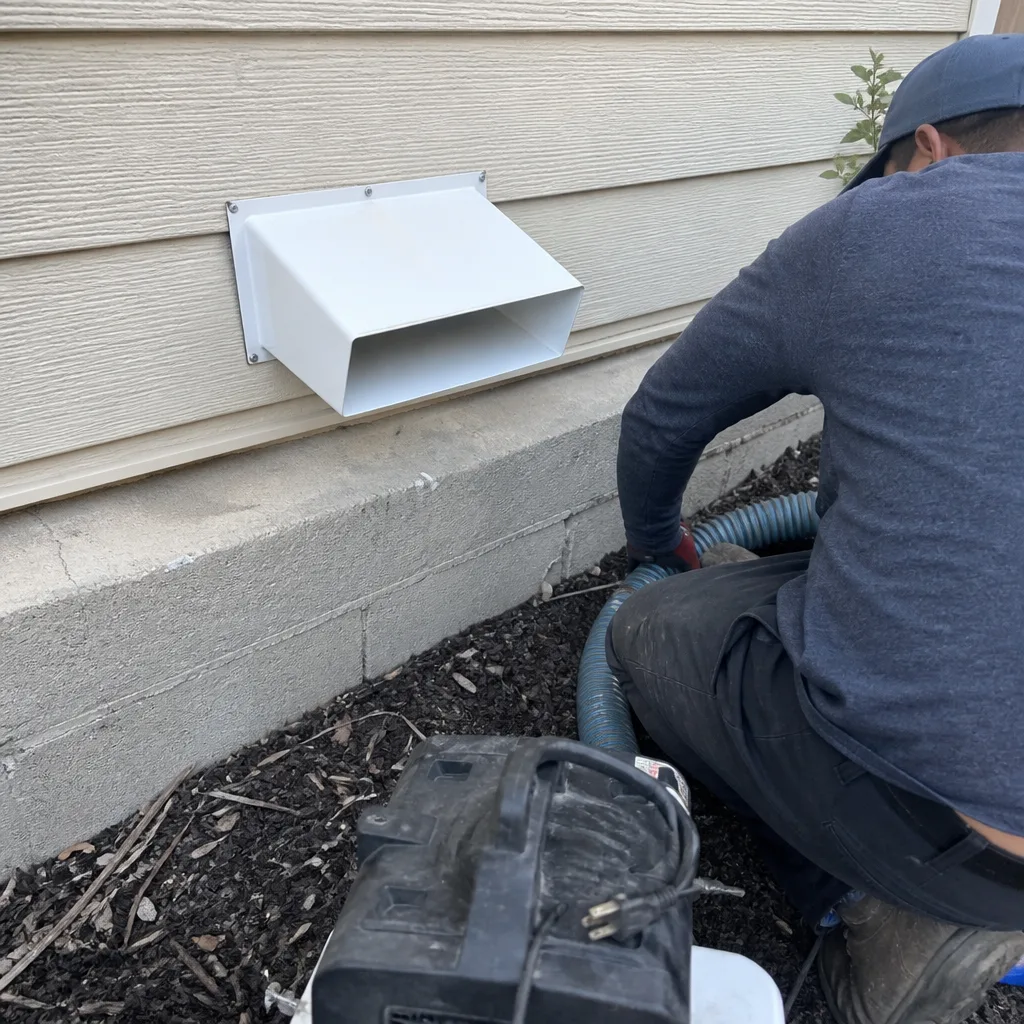
- Check exterior termination points for rodent screening. Every dryer vent, kitchen exhaust, and bathroom fan vents to the exterior, and each termination point needs intact screening or a damper. A missing screen is an open door for rodents, and it’s the most common entry point we find on Clovis homes. Screening should be metal, not plastic, because rodents chew through plastic.
- Inspect duct access panels and connection joints. Where duct sections connect, where flex duct meets rigid duct, and where registers attach to boots, small gaps develop over time. These gaps pull attic air into the system during smoke events and leak conditioned air year-round. Sealing these gaps is the single most effective preventive step for both smoke contamination and energy loss.
- Check the condensate drain and pan. A clogged condensate line causes water to back up and overflow into adjacent ductwork, especially in horizontal attic installations. This is a slow-developing water issue that often goes unnoticed until mold odor appears. Clearing the line and checking the pan before summer heat arrives is cheap prevention.
- Look for signs of previous animal activity. If you’ve had rodent problems in the past, assume they’ve been in your ducts until proven otherwise. Look for chewed insulation, droppings at registers, or unexplained odor when the system runs. Past intrusion is the best predictor of future intrusion, and entry points that went unrepaired will be reused.
- Running the HVAC system through a heavy smoke event because “the filter will handle it.” A standard filter cannot handle smoke particulate load at AQI levels above 150. What you’re doing is actively coating your duct interior with contamination that will require professional extraction to remove.
- Waiting to see if the smell goes away on its own. Smoke odors in ductwork do not dissipate. They get absorbed into fiberglass liner and coil surfaces, where they persist for months or years. The longer you wait, the more deeply the contamination sets.
- Using consumer cleaning products on duct interiors. Household disinfectants and air fresheners do not remove contamination, and some products leave residues that attract more dust and interact unpredictably with heat and airflow. Professional remediation uses EPA-registered products designed for HVAC surfaces.
- Attempting to extract rodent contamination without containment. Disturbing rodent droppings in ductwork without proper isolation spreads hantavirus-carrier particulate throughout the home. This is not a DIY situation, and it’s not a job for a general handyman.
- Drying water-damaged fiberglass liner instead of replacing it. Fiberglass liner that has been wet for more than 48 hours almost always requires replacement. Attempting to dry it in place leaves moisture trapped against the duct wall, and mold colonizes from the inside out.
- Filing an insurance claim without written documentation. An adjuster cannot approve what they cannot see. Written assessments, photographs, and specific scope statements are the difference between an approved claim and a denied one. Document everything before any cleanup begins.
- Hiring a cleaner when the ducts need repair. If the emergency has caused physical damage, cleaning alone will not restore the system. The right contractor is one who can both clean contaminated ducts and repair or replace damaged sections, because you’re not going to want to coordinate two companies in the middle of an emergency.
When Ducts Must Be Replaced, Not Dried
Some duct sections cannot be salvaged after water intrusion. The rule we use: if the water was contaminated (sewage, rodent-contaminated attic water, flood water), replacement is non-negotiable. If the water was clean but the duct is internally lined with fiberglass and has been wet more than 48 hours, replacement is almost always the right call. If the duct is flex duct with a porous inner liner, water that has penetrated the liner cannot be effectively dried, and mold growth is a matter of time, not possibility.
When replacement is required, it should be done by a contractor who repairs ducts, not one who only cleans them. The difference is the difference between a fixed system and a patched one. Our Air Duct Repair in Clovis service handles both assessment and replacement, so you’re not coordinating between two companies while water sits in your ducts.
Insurance Documentation: What Your Assessment Must Include
Homeowners insurance policies in the Clovis market generally cover duct remediation when the damage is sudden, accidental, and traceable to a covered peril. Wildfire smoke infiltration, roof-failure water intrusion, and rodent damage are all commonly covered scenarios, but the claim lives or dies on the documentation. A contractor’s spoken assessment is not enough. A written report with specific elements is what adjusters need.
What a Claims-Quality Assessment Includes
We write assessments for Clovis homeowners regularly, and we’ve learned which details matter to adjusters: specificity, photography, and a clear line between pre-existing conditions and the covered event. If you’re filing a claim, get a written assessment before any cleanup work begins, and keep a copy for your records. For the cleaning and remediation work itself, see our Air Duct Cleaning in Clovis page for what the process involves.
Pre-Season Emergency Prep: The One Inspection That Prevents Most Emergencies
Most duct emergencies in Clovis don’t start with a dramatic event. They start with a small vulnerability that goes unnoticed until smoke, water, or a rodent finds it. The single highest-value prevention task is a pre-season inspection focused on access points and termination points. Here’s what that inspection covers and why it prevents the three most common emergencies.
This inspection takes a professional about an hour, and it’s the most cost-effective duct maintenance a Clovis homeowner can do. It’s also the foundation of emergency preparedness: a system with sealed access points, intact terminations, and a clear drain line is a system that survives a smoke event or a roof leak with minimal damage. Our Duct Cleaning Clovis home page covers the full range of what we inspect and service.
Why Equipment Matters in Emergency Duct Work
Emergency duct work is not a place for shortcuts. The difference between a system that’s actually remediated and one that’s been superficially cleaned comes down to equipment and process. Here’s what we run on contamination-response jobs and why each piece matters.
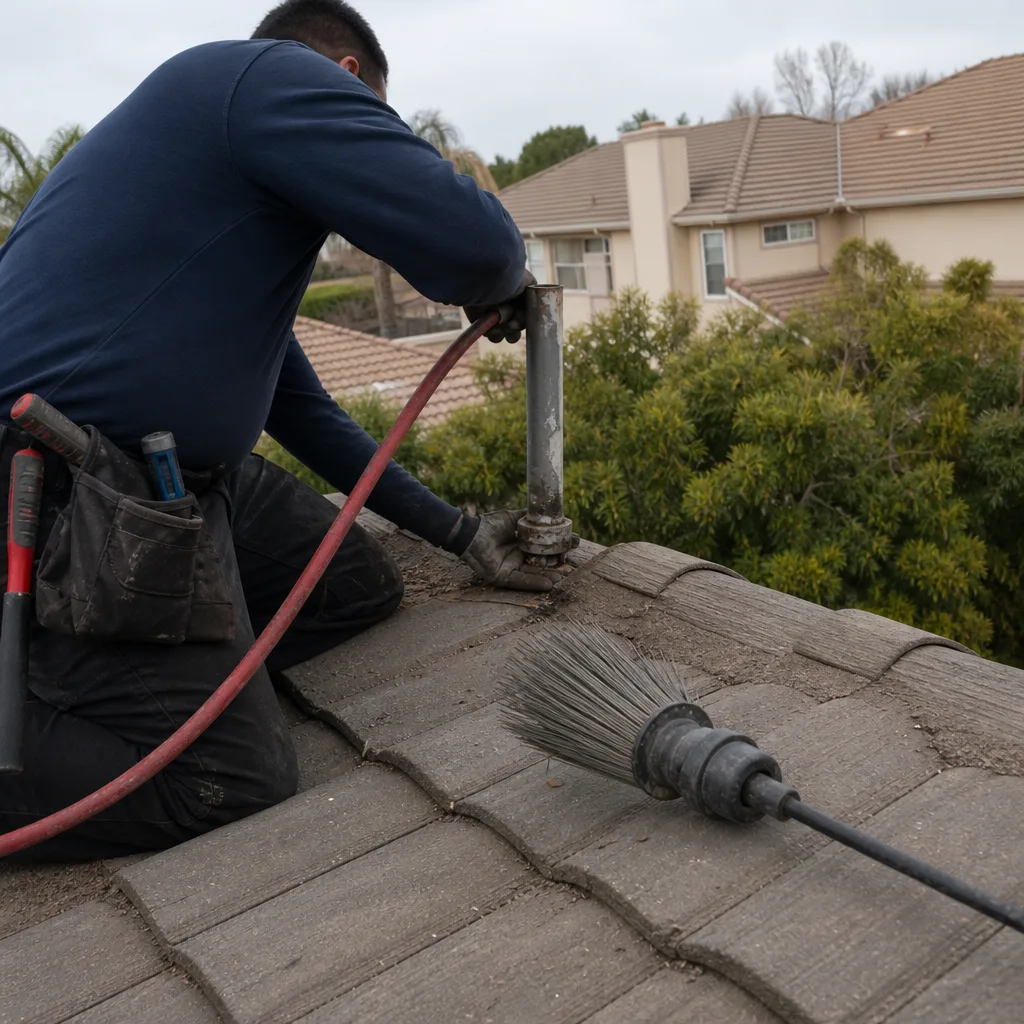
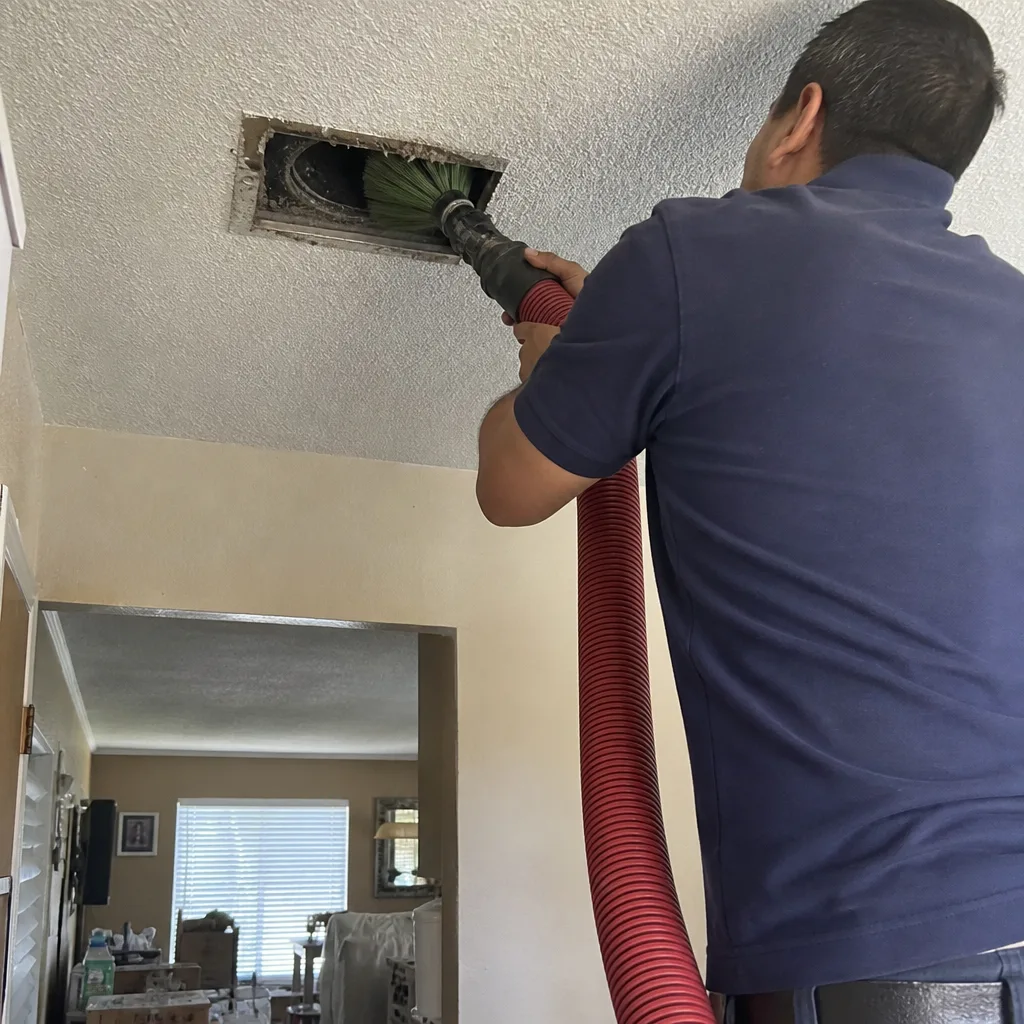
Rotobrush brush-contact extraction. Smoke particulate and rodent nesting material adhere to duct surfaces. A vacuum alone, no matter how powerful, does not remove adhered contamination. The Rotobrush system uses mechanical brush agitation to break the bond between contaminant and duct surface, then extracts the loosened material under negative pressure. This is the same principle used by restoration crews doing post-fire cleanup, and it’s the reason why “we vacuumed your ducts” is not the same statement as “we extracted the contamination.”
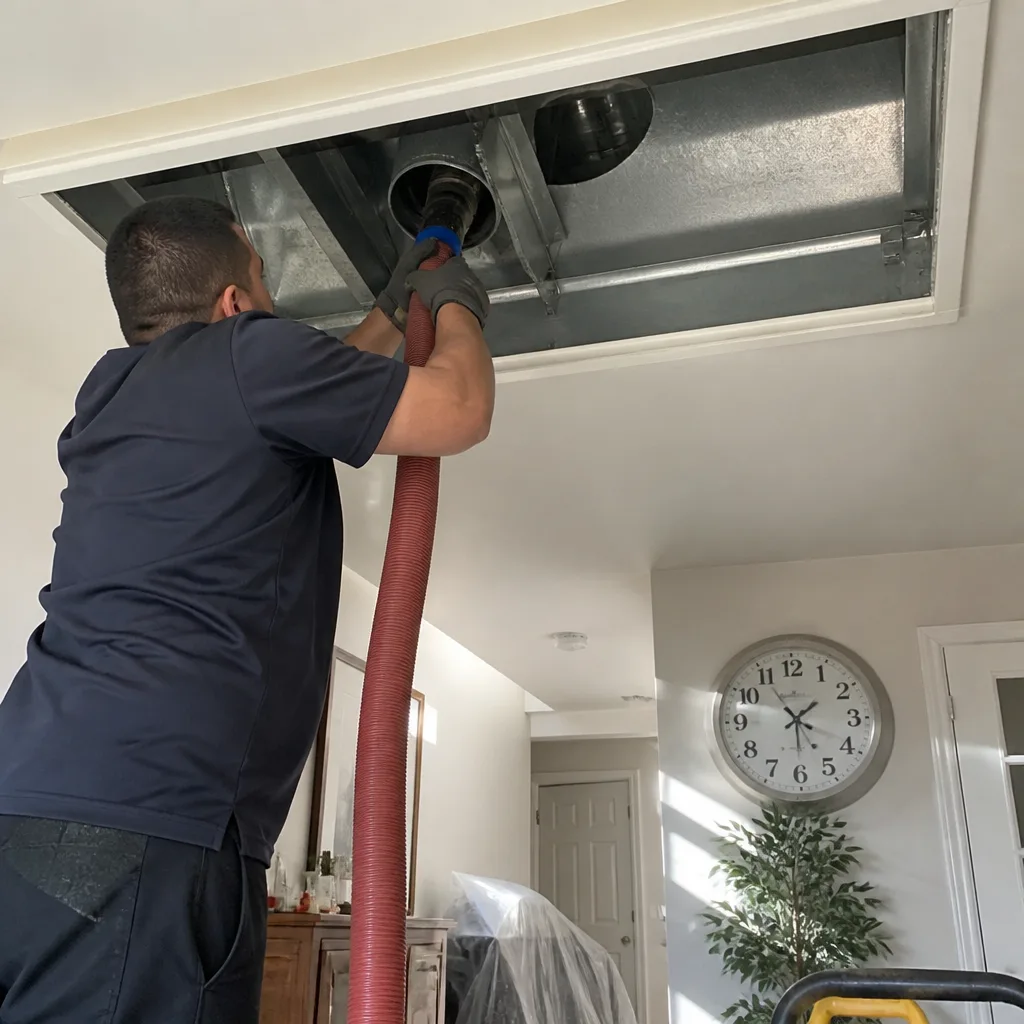
Nikro HEPA-filtered vacuum systems. The critical word here is HEPA. Without HEPA filtration, contaminants pulled from ducts are exhausted back into the home or into the surrounding work area. HEPA filtration captures 99.97 percent of particles at 0.3 microns, which includes smoke particulate, mold spores, and rodent allergens. In a contamination-response scenario, HEPA filtration is not a luxury, it’s the line between remediation and redistribution.
Abatement Technologies equipment. This is the hardware category used in professional remediation environments for containment and air scrubbing. When we’re working on rodent contamination or mold colonization, we’re applying the same containment standard that restoration companies use on category 2 water jobs, because the contamination load is similar.
For homeowners with whole-home filtration systems, the ductwork is only part of the IAQ picture. We service Honeywell and Aprilaire systems as part of our Air Duct Cleaning in Clovis work, because a clean duct system feeding through a neglected filtration system is half a solution. The work integrates: ducts, filters, and airflow are one system, and they should be treated that way.
Common Mistakes to Avoid
When to Call a Professional
Any of these scenarios warrants an immediate professional assessment: your HVAC ran during a smoke event with AQI above 300 and you can smell smoke when the system cycles; you’ve found rodent droppings at registers or heard animal activity in duct runs; water has entered your ducts from any source and been present for more than 24 hours; or you’re filing an insurance claim and need documentation. In each case, the cost of waiting compounds, whether that’s more deeply embedded contamination, more extensive mold colonization, or a denied claim for lack of evidence. Duct Cleaning Clovis offers free estimates in Clovis. Call (855) 661-0630 and we’ll assess the situation honestly, even if the answer is that your ducts don’t need work.
See the difference
 Before
 After
 Before
 After
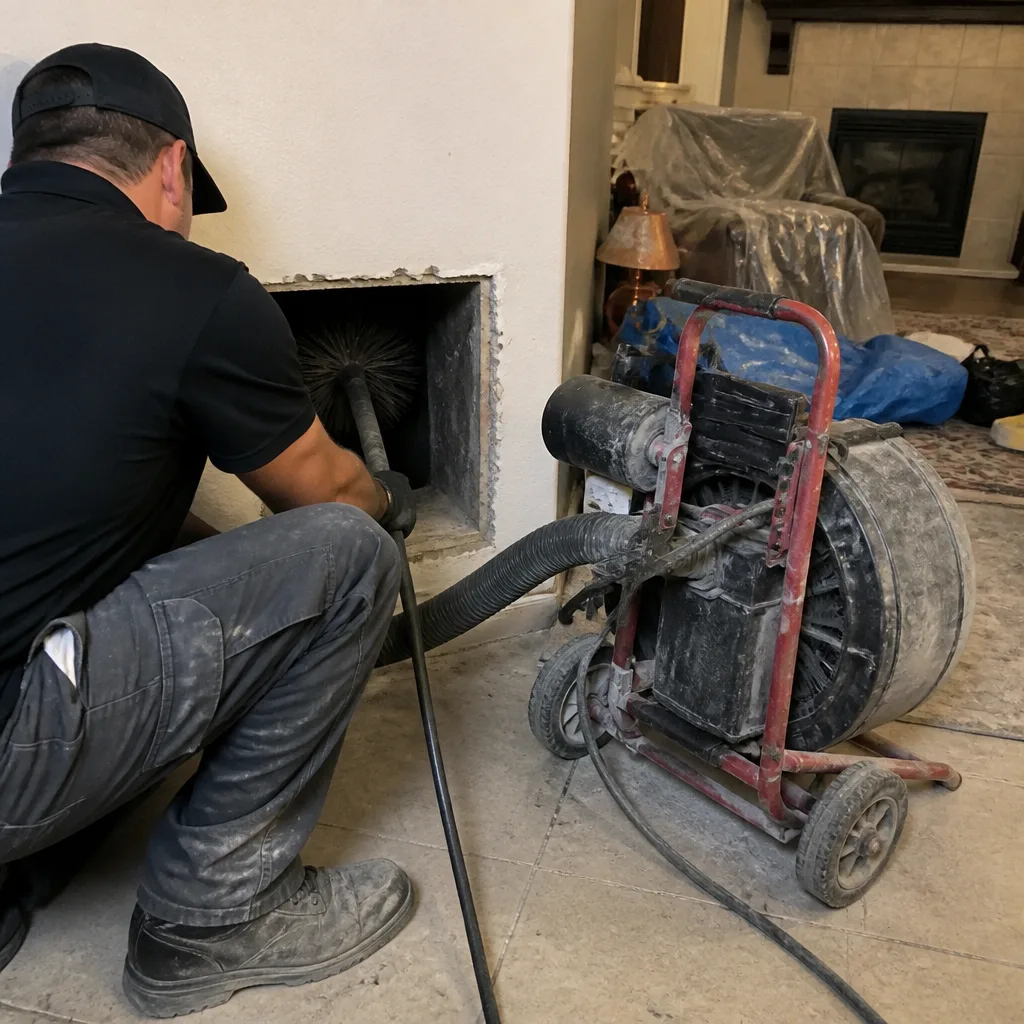 Before
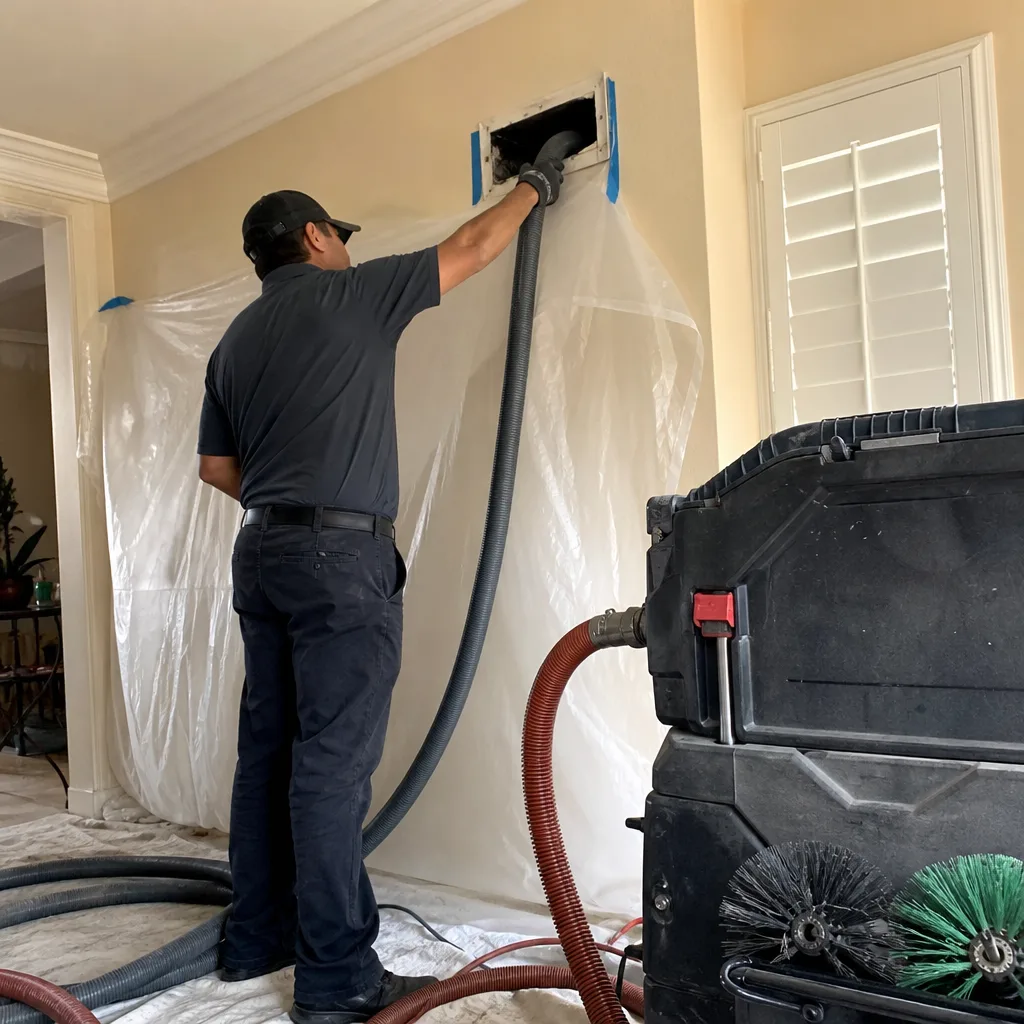 After
Frequently Asked Questions
If your HVAC system ran during a Clovis smoke event with AQI above 150, smoke particulate almost certainly entered your ducts. Confirmation comes from inspection: a dark film on duct surfaces behind return grilles, a smoke odor that persists after filter changes, or visible particulate on blower components. These signs indicate professional cleaning is warranted.
No. Smoke particulate bonds to duct surfaces and requires mechanical brush agitation plus HEPA-filtered extraction to remove. Consumer vacuums lack the reach, filtration, and agitation capability to remove adhered residue from duct lining. Attempting DIY cleaning can also push particulate deeper into the system.
Mold colonization in ductwork begins within 24 to 48 hours when moisture and organic material are present. In hot Clovis summers, where attic temperatures accelerate microbial growth, the timeline can be shorter. This is why immediate shutdown and professional drying or replacement within the first 48 hours is critical.
Most homeowners policies in the Clovis market cover sudden and accidental rodent damage when the homeowner has not been negligent in maintenance. The key is documentation: photos, a written assessment identifying the damage and its cause, and a scope statement for cleanup and repair. Pre-existing damage or long-term neglect may fall outside coverage.
Given Clovis’s combination of wildfire smoke exposure, summer heat that pushes rodents indoors, and winter rain events, an annual inspection focused on termination points, access panels, and condensation management is reasonable. Homes that have experienced a specific event, like a smoke episode or roof leak, should schedule an inspection immediately after the event.
It depends on the type and extent of damage. Smoke contamination typically requires cleaning with brush-contact extraction and HEPA filtration. Water intrusion and rodent damage often require both cleaning and repair or replacement of affected sections. A professional assessment will tell you which is needed, and our Air Duct Repair in Clovis service handles both without the need to coordinate between companies.
The Bottom Line
Clovis homeowners plan for earthquakes and power outages, but the duct emergencies that actually strike most often are quieter: smoke that coats duct interiors during wildfire events, rodents that colonize attic ducts during summer heat, and water that seeps into ductwork after roof failures. Each of these scenarios has a specific response protocol, and the first 48 hours determine whether you’re dealing with a cleaning or a replacement. The prevention story is simpler: inspect termination points, seal access panels, maintain your condensate line, and your ducts will survive most events with minimal damage. When an emergency does hit, call a company with the equipment and repair capability to handle the full scope. Duct Cleaning Clovis is that company for Clovis homeowners. Call (855) 661-0630 for a free estimate.
Written by the team at Duct Cleaning Clovis, serving Clovis since 2012.